Case Media
Case Notes
This page keeps the media, full prompt, and original source together so you can inspect the result first and decide whether the prompt is worth copying, saving, or comparing.
Case Insights
To make this page easier to search, cite, and reuse later, the case is also broken down into practical guidance about usage, visual cues, and prompt structure.
Best Fit Scenarios
- Use this as a character design benchmark when you need a fast style baseline before rewriting your own prompt.
- It is especially helpful if your target overlaps with Portrait, Poster, Character and you want to judge the image result before tuning wording.
- Keep it as a control sample when you compare nearby prompt variants one variable at a time.
Visual Signals To Notice
- The clearest style signals here are Portrait, Poster, Character, so those should usually stay in your first rewrite.
- Look at silhouette, costume language, mood styling, and whether the character reads clearly at a glance.
- This case keeps 2 media outputs, which makes it easier to check whether the style remains stable across multiple results.
How The Prompt Is Structured
- The prompt reads as a long, highly specified prompt, which is useful when you want to judge how much specificity this direction needs.
- Its keyword cluster is centered on Portrait, Poster, Character, so you can usually keep that cluster while swapping subject, camera, layout, or copy details.
- A practical rewrite path is: keep the outcome, keep the strongest style cues, then replace only the subject and environment blocks.
Good Follow-up Questions
- What changes first if you keep Portrait, Poster, Character but switch the subject matter?
- Which part of the result comes from section-level structure (Character Design) versus tag-level style cues?
- Which related cases in the same section give you a cleaner or more extreme variation of the same direction?
Full Prompt
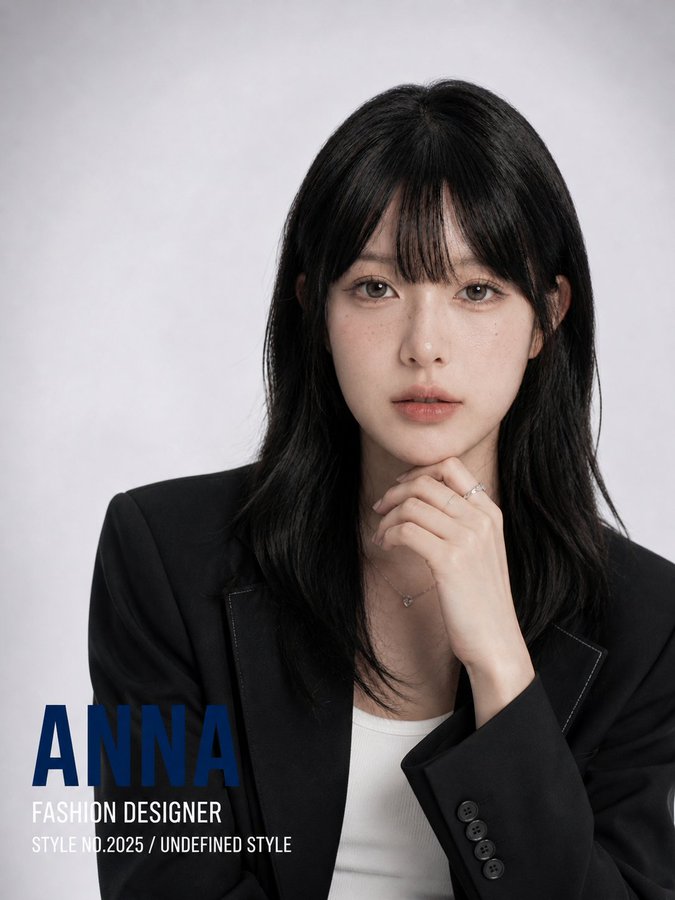
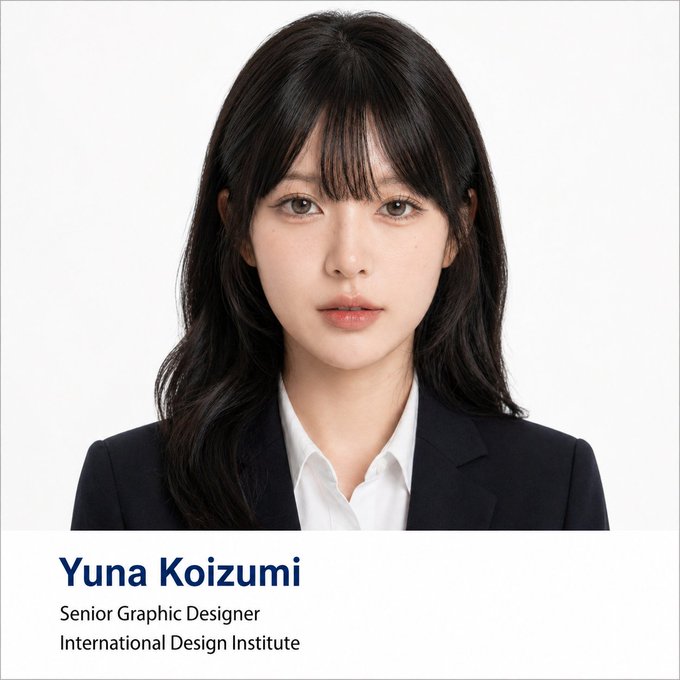
Please generate a formal business profile headshot poster based on the portrait photo I uploaded. Retain the character's true identity features, facial proportions, basic face shape, and overall temperament, do not change the character's identity. You can moderately optimize the facial contours to make the facial lines clearer, more natural, and more photogenic; smooth the skin texture, reduce blemishes, dullness, and uneven skin tone, but do not over-smooth, retain real skin details and natural light and shadow. Please design a matching business hairstyle according to the character's face shape. The hairstyle should be clean, neat, mature, professional, suitable for formal occasions, with natural and layered hair strands, not exaggerated. Please pair the character with formal business attire, such as a dark suit jacket, a white or light-colored shirt, optionally paired with a tie. The overall styling should be high-end, concise, professional, and trustworthy. The image is a front-facing half-body portrait, the character is centered, looking straight at the camera, with a natural and confident expression. The background is a pure white solid color background, the lighting is soft and even, similar to a professional ID photo, corporate headshot photography, or university official website profile photo. The overall style is clean, formal, business-like, high-definition realistic photography texture, square ratio 1:1. Reserve a concise information bar at the bottom of the image, and add modern and concise typography text: Name: [Yuna Koizumi] Identity/Position: [Senior Graphic Designer] Major/Department/Institution: [International Institute of Design] Important text rules: If the name, identity, position, major, department, institution, or other text that needs to be displayed on the image input by the user is in Chinese or other languages, please first translate these contents into natural, accurate, and formal English before putting them into the image. Unless the user explicitly requests to keep the Chinese text, do not display Chinese text in the image. Typography requirements: The first line of the name uses dark blue bold large-size English text; the second and third lines use black regular-size English text. The overall typography refers to the style of university official website personal profiles, academic conference character introduction cards, or professional business headshot posters.