Case Media
Case Notes
This page keeps the media, full prompt, and original source together so you can inspect the result first and decide whether the prompt is worth copying, saving, or comparing.
Case Insights
To make this page easier to search, cite, and reuse later, the case is also broken down into practical guidance about usage, visual cues, and prompt structure.
Best Fit Scenarios
- Use this as a character design benchmark when you need a fast style baseline before rewriting your own prompt.
- It is especially helpful if your target overlaps with 35mm, Neon, Portrait and you want to judge the image result before tuning wording.
- Keep it as a control sample when you compare nearby prompt variants one variable at a time.
Visual Signals To Notice
- The clearest style signals here are 35mm, Neon, Portrait, so those should usually stay in your first rewrite.
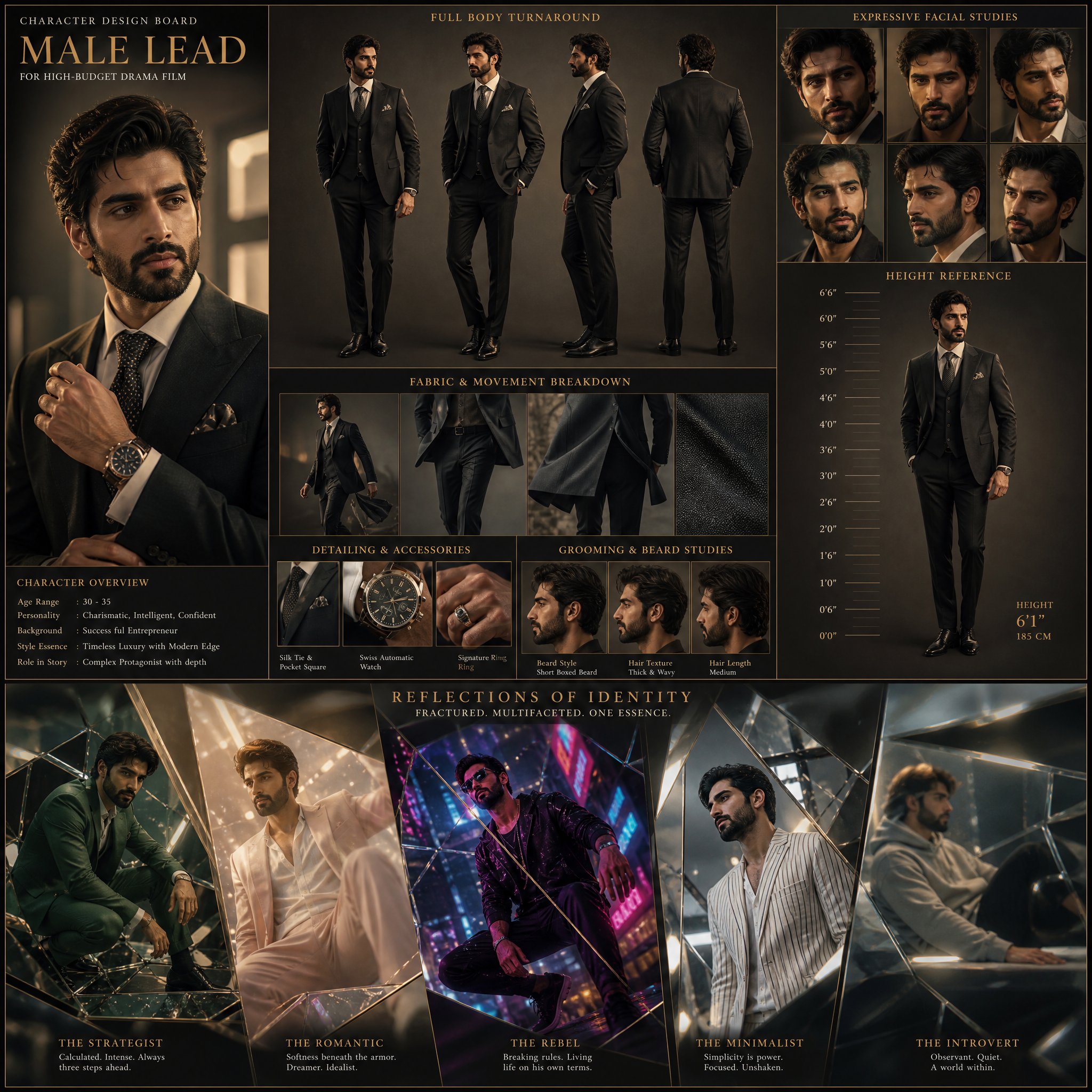
- Look at silhouette, costume language, mood styling, and whether the character reads clearly at a glance.
- This case keeps one primary output, so the first image should be treated as the main visual reference.
How The Prompt Is Structured
- The prompt reads as a long, highly specified prompt, which is useful when you want to judge how much specificity this direction needs.
- Its keyword cluster is centered on 35mm, Neon, Portrait, so you can usually keep that cluster while swapping subject, camera, layout, or copy details.
- A practical rewrite path is: keep the outcome, keep the strongest style cues, then replace only the subject and environment blocks.
Good Follow-up Questions
- What changes first if you keep 35mm, Neon, Portrait but switch the subject matter?
- Which part of the result comes from section-level structure (Character Design) versus tag-level style cues?
- Which related cases in the same section give you a cleaner or more extreme variation of the same direction?
Full Prompt
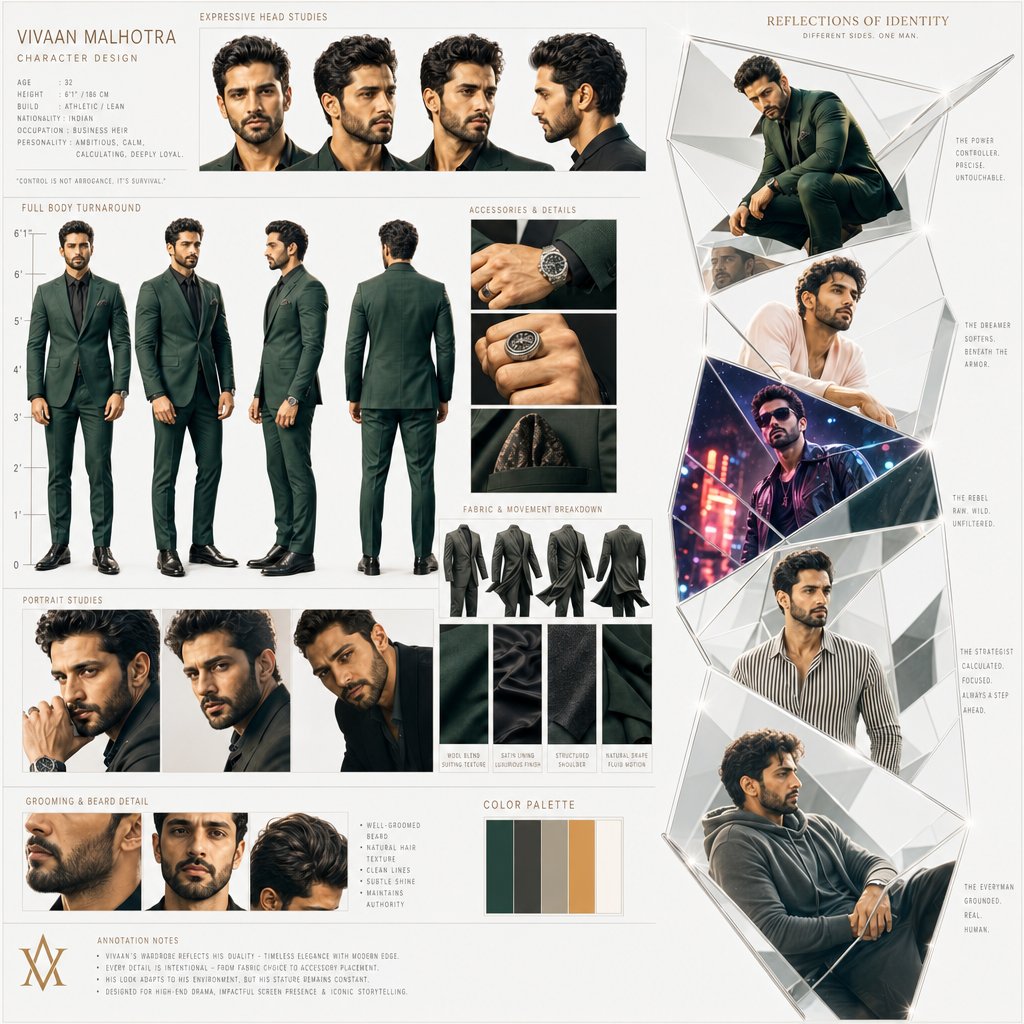
Create a cinematic character design board for a high-budget drama film. A handsome male lead with a sharp jawline, well-groomed stylish beard, deep expressive eyes, and a confident posture. He wears a perfectly tailored luxury suit with subtle fabric textures and refined accessories such as a premium wristwatch and elegant ring. Include a full-body turnaround, expressive facial studies, cinematic portrait shots, fabric movement breakdown of the suit, detailed grooming and beard studies, annotation notes, and a height scale reference for production design clarity. Mood & Style: soft studio lighting with a golden Hollywood glow, rich cinematic color grading, shallow depth of field, premium film still aesthetic. Visual exploration through fractured reflective geometry: Green suit male crouched in reflection within angular glass shards Pastel outfit male softened inside curved reflective surfaces Neon streetwear male stretched across fractured mirror glass Minimal striped outfit male captured in sharp mirrored geometry Hoodie-clad male relaxed, blurred in distant reflective shard High-end conceptual fashion artwork with dramatic light catching on glass edges. Surreal luxury editorial aesthetic, floating geometric compositions, and a futuristic gallery-style presentation of identity fragments.