Case Media
Case Notes
This page keeps the media, full prompt, and original source together so you can inspect the result first and decide whether the prompt is worth copying, saving, or comparing.
Case Insights
To make this page easier to search, cite, and reuse later, the case is also broken down into practical guidance about usage, visual cues, and prompt structure.
Best Fit Scenarios
- Use this as a character design benchmark when you need a fast style baseline before rewriting your own prompt.
- It is especially helpful if your target overlaps with Portrait, Cinematic, Screenshot and you want to judge the image result before tuning wording.
- Keep it as a control sample when you compare nearby prompt variants one variable at a time.
Visual Signals To Notice
- The clearest style signals here are Portrait, Cinematic, Screenshot, so those should usually stay in your first rewrite.
- Look at silhouette, costume language, mood styling, and whether the character reads clearly at a glance.
- This case keeps one primary output, so the first image should be treated as the main visual reference.
How The Prompt Is Structured
- The prompt reads as a long, highly specified prompt, which is useful when you want to judge how much specificity this direction needs.
- Its keyword cluster is centered on Portrait, Cinematic, Screenshot, so you can usually keep that cluster while swapping subject, camera, layout, or copy details.
- A practical rewrite path is: keep the outcome, keep the strongest style cues, then replace only the subject and environment blocks.
Good Follow-up Questions
- What changes first if you keep Portrait, Cinematic, Screenshot but switch the subject matter?
- Which part of the result comes from section-level structure (Character Design) versus tag-level style cues?
- Which related cases in the same section give you a cleaner or more extreme variation of the same direction?
Full Prompt
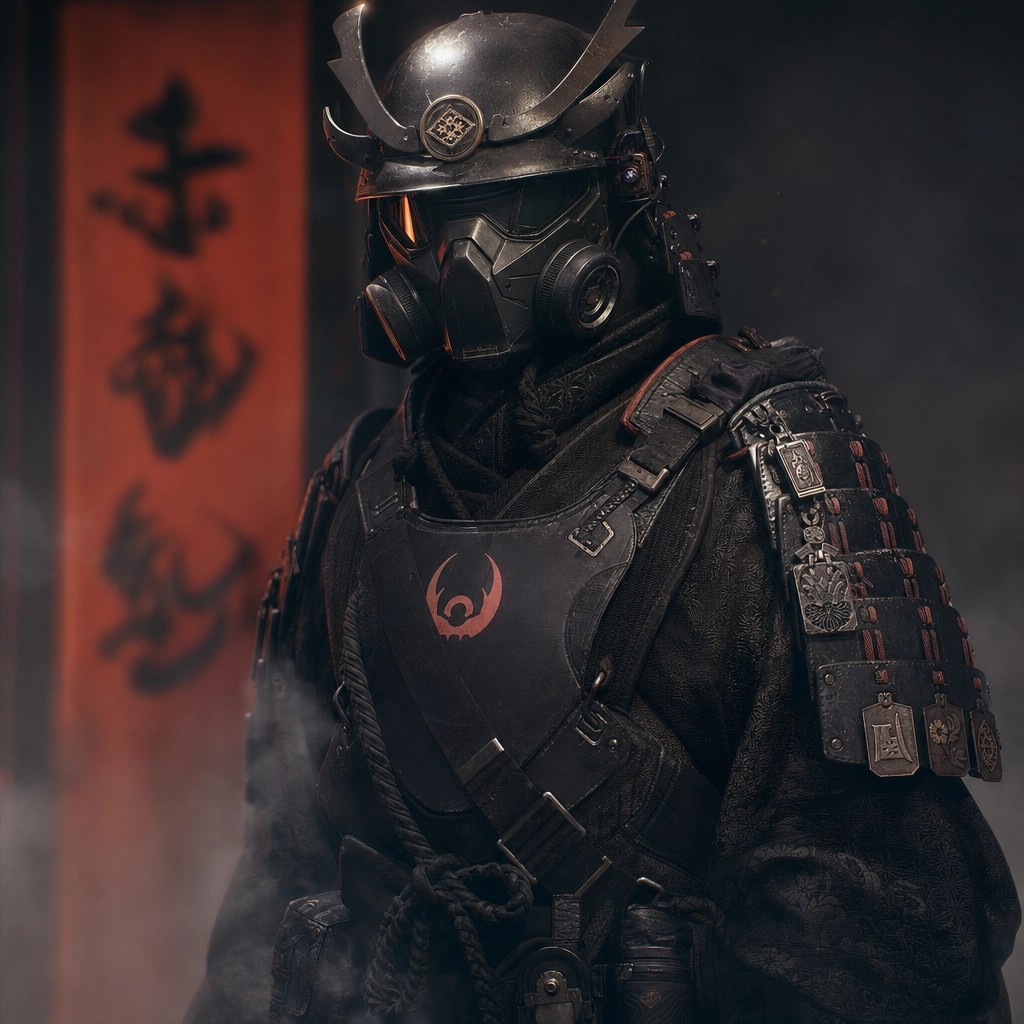
Create a cinematic dark fantasy portrait of a futuristic samurai warrior standing in a smoky interior, framed from mid-torso upward and turned slightly three-quarters to the viewer's left. The warrior wears {argument name="armor color" default="matte black"} tactical samurai armor with layered shoulder plates, small metal charms and engraved plaques, leather straps, buckles, braided rope cords, and a chest plate marked with a {argument name="chest emblem" default="red horned crescent clan symbol"}. The helmet is a modernized kabuto with tall sweeping crescent antlers, a round crest medallion on the brow, scuffed black metal, and a full respirator gas mask with twin circular filters, angular face plating, and a dark tinted visor that hides the eyes. Use richly textured black brocade fabric under the armor, subtle red stitching and accents, worn edges, scratches, dust, and realistic metal reflections. Behind the figure, place one vertical red-orange banner on the left side with large blurred black Japanese calligraphy, reading {argument name="banner text" default="赤砂鬼"}, while the rest of the background fades into deep charcoal shadow. Atmosphere should be moody and cinematic with drifting smoke at the lower left, warm red rim light from the banner side, cool dim fill light from the right, shallow depth of field, high-detail photorealistic rendering, dramatic contrast, square composition, no visible face, no extra characters, no readable text except the banner calligraphy.