Case Media
Case Notes
This page keeps the media, full prompt, and original source together so you can inspect the result first and decide whether the prompt is worth copying, saving, or comparing.
Case Insights
To make this page easier to search, cite, and reuse later, the case is also broken down into practical guidance about usage, visual cues, and prompt structure.
Best Fit Scenarios
- Use this as a character design benchmark when you need a fast style baseline before rewriting your own prompt.
- It is especially helpful if your target overlaps with Portrait, Cinematic, Fashion and you want to judge the image result before tuning wording.
- Keep it as a control sample when you compare nearby prompt variants one variable at a time.
Visual Signals To Notice
- The clearest style signals here are Portrait, Cinematic, Fashion, so those should usually stay in your first rewrite.
- Look at silhouette, costume language, mood styling, and whether the character reads clearly at a glance.
- This case keeps one primary output, so the first image should be treated as the main visual reference.
How The Prompt Is Structured
- The prompt reads as a long, highly specified prompt, which is useful when you want to judge how much specificity this direction needs.
- Its keyword cluster is centered on Portrait, Cinematic, Fashion, so you can usually keep that cluster while swapping subject, camera, layout, or copy details.
- A practical rewrite path is: keep the outcome, keep the strongest style cues, then replace only the subject and environment blocks.
Good Follow-up Questions
- What changes first if you keep Portrait, Cinematic, Fashion but switch the subject matter?
- Which part of the result comes from section-level structure (Character Design) versus tag-level style cues?
- Which related cases in the same section give you a cleaner or more extreme variation of the same direction?
Full Prompt
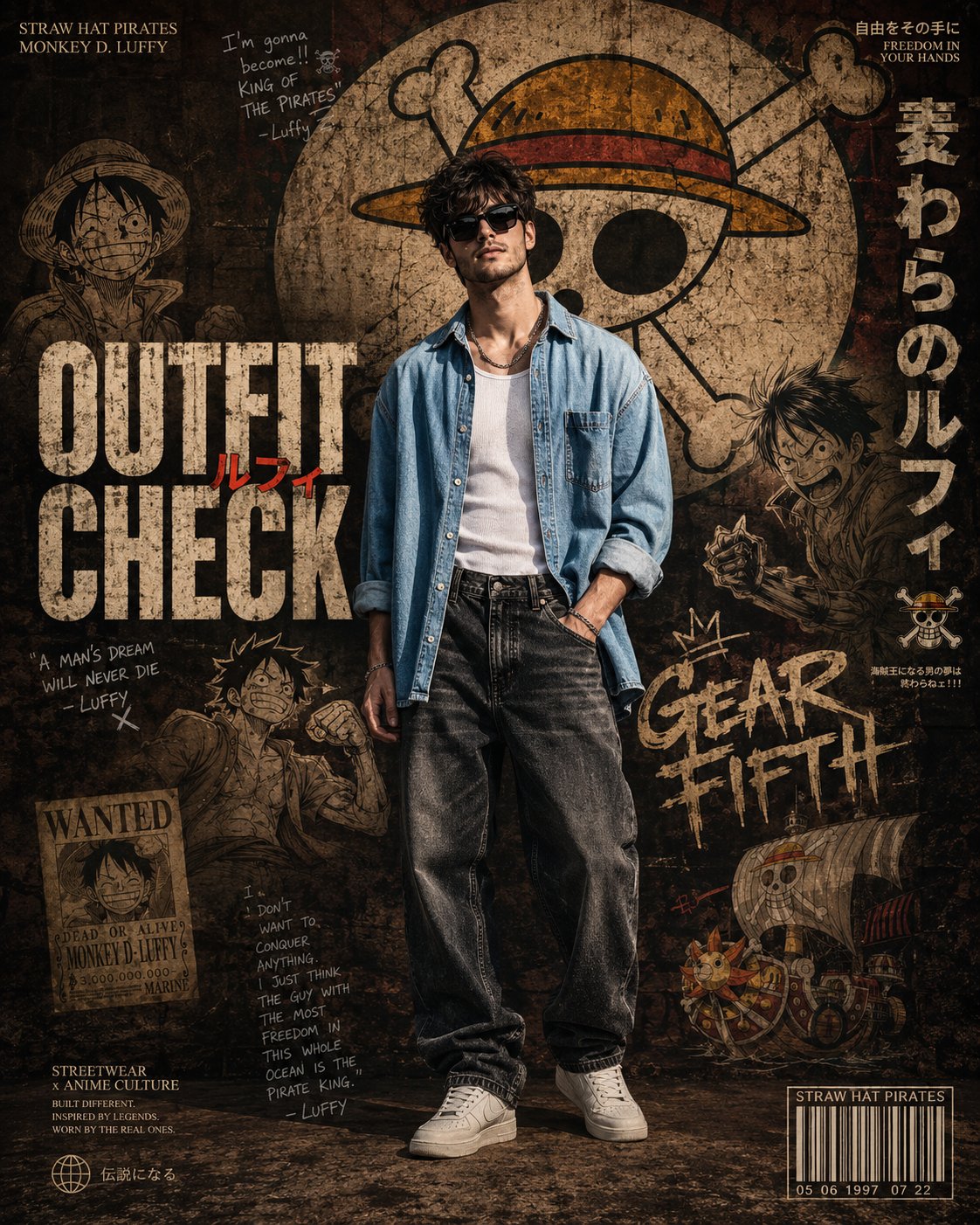
Create a cinematic anime inspired streetwear poster featuring a confident young man standing in the center in a relaxed pose with one hand in pocket. He wears black sunglasses, a light blue oversized denim shirt layered over a white tank top, faded charcoal washed jeans, white sneakers, silver chain necklace, and a modern urban hairstyle with trimmed beard. Background features a massive vintage textured Straw Hat Pirates skull logo from One Piece, blending into a gritty brown parchment wall with distressed textures, scratches, dust, and dark vignette edges. Add hand drawn anime doodles of Monkey D. Luffy around the composition with rough sketch aesthetics. Poster design should feel like a premium Gen Z fashion editorial mixed with anime street culture. Include cinematic shadows, moody warm brown tones, grunge overlays, faded ink textures, and dramatic contrast. Typography elements: Large distressed bold text saying “OUTFIT CHECK” Small handwritten phrases and pirate themed quotes Japanese vertical typography on the side Barcode element at bottom corner “Gear Fifth” graffiti text Minimal fashion magazine layout styling Style: ultra detailed, anime streetwear editorial, cinematic poster art, gritty urban fashion campaign, textured vintage paper aesthetic, modern hypebeast design, high contrast lighting, premium composition, realistic human proportions, sharp focus. Aspect ratio: 4:5 portrait.