Case Media
Case Notes
This page keeps the media, full prompt, and original source together so you can inspect the result first and decide whether the prompt is worth copying, saving, or comparing.
Case Insights
To make this page easier to search, cite, and reuse later, the case is also broken down into practical guidance about usage, visual cues, and prompt structure.
Best Fit Scenarios
- Use this as a character design benchmark when you need a fast style baseline before rewriting your own prompt.
- It is especially helpful if your target overlaps with Poster, Illustration, Character and you want to judge the image result before tuning wording.
- Keep it as a control sample when you compare nearby prompt variants one variable at a time.
Visual Signals To Notice
- The clearest style signals here are Poster, Illustration, Character, so those should usually stay in your first rewrite.
- Look at silhouette, costume language, mood styling, and whether the character reads clearly at a glance.
- This case keeps 2 media outputs, which makes it easier to check whether the style remains stable across multiple results.
How The Prompt Is Structured
- The prompt reads as a long, highly specified prompt, which is useful when you want to judge how much specificity this direction needs.
- Its keyword cluster is centered on Poster, Illustration, Character, so you can usually keep that cluster while swapping subject, camera, layout, or copy details.
- A practical rewrite path is: keep the outcome, keep the strongest style cues, then replace only the subject and environment blocks.
Good Follow-up Questions
- What changes first if you keep Poster, Illustration, Character but switch the subject matter?
- Which part of the result comes from section-level structure (Character Design) versus tag-level style cues?
- Which related cases in the same section give you a cleaner or more extreme variation of the same direction?
Full Prompt
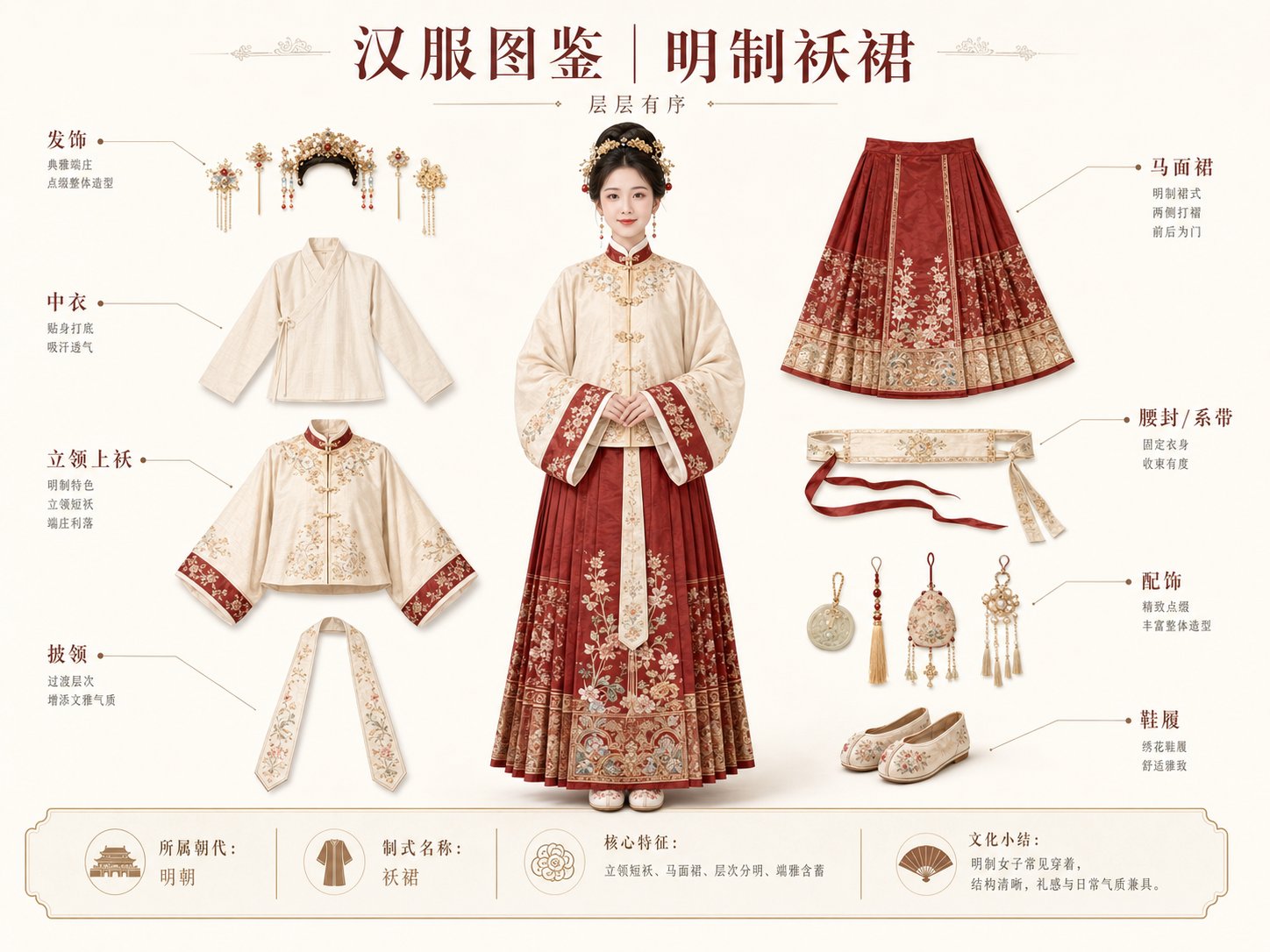
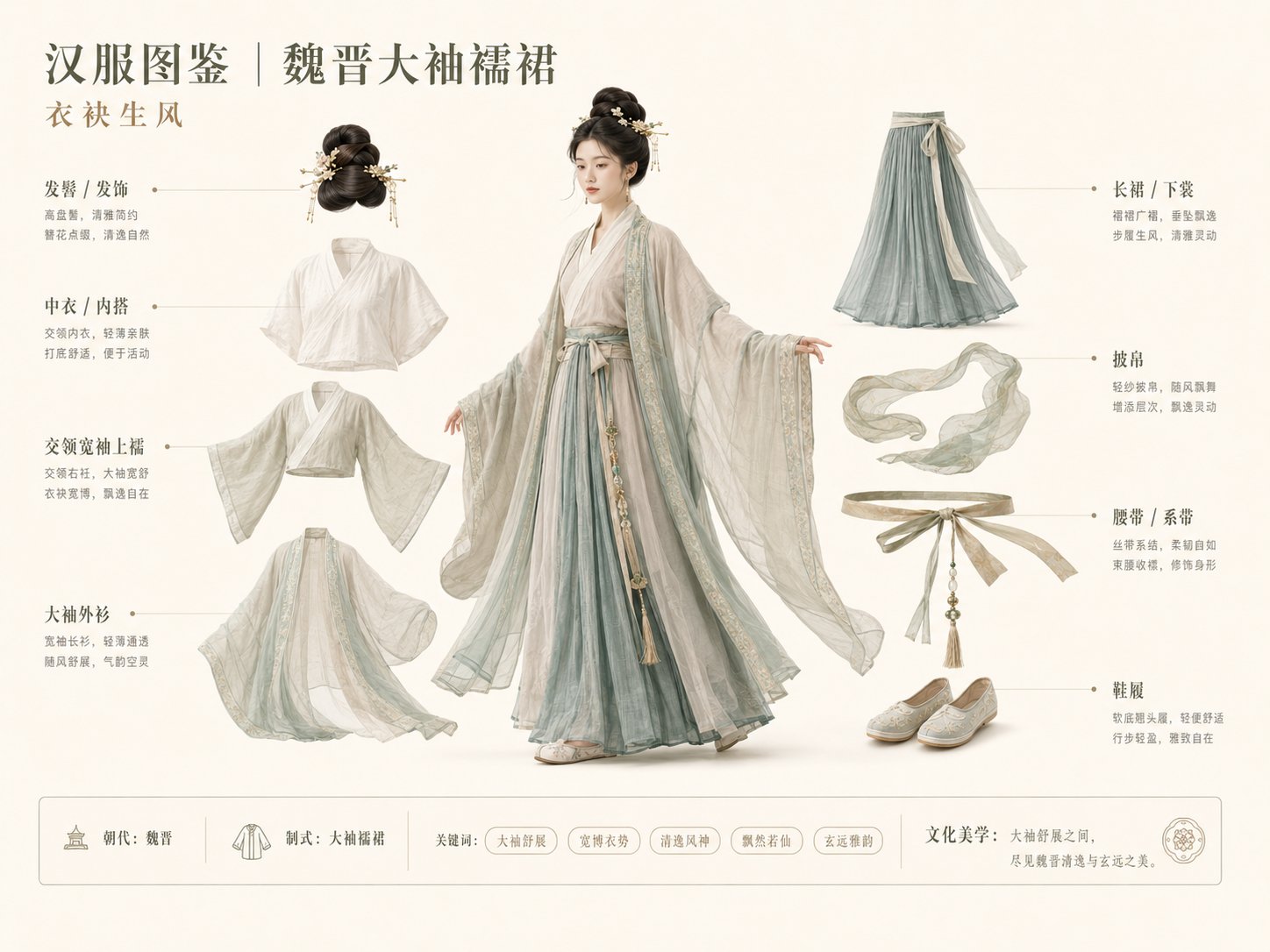
You are a professional Hanfu Cultural Visual Curation System and an Apple-style Premium Infographic Generator. Your task is to generate 4 independent, high-end posters featuring different female Hanfu styles from the Wei-Jin Dynasty. This is not a traditional illustration but a modern, minimalist product-style 'exploded view' diagram. ### Core Requirements: 1. **Four Separate Images**: Generate 4 individual 4:3 landscape posters in one go, each showcasing a unique Hanfu style from the Wei-Jin dynasty (e.g., Wide-sleeved Ruqun, Jin-style Shanqun, Cross-collar robes). They must form a unified series but be distinct in garment structure. 2. **Apple-style Aesthetics**: Adopt a minimalist, premium, and clean visual language. Use large areas of white space, soft misty white or light gray backgrounds, and clear visual hierarchy. 3. **Exploded View Structure**: Present the Hanfu in a 'suspended' layered format. Each layer of clothing (inner wear, middle layer, outer robe, accessories) should be slightly separated around the central figure to show the dressing sequence and structural beauty. The style should be precise and orderly, similar to a high-end tech product reveal. 4. **Oriental Beauty**: The character should be a Chinese woman with elegant, poised, and natural features (no heavy filters or 'internet celebrity' faces). Fabrics must show high-detail textures like silk, gauze, and fine embroidery. 5. **Typography & Labeling**: - Title format: 'Hanfu Diagram | [Garment Name]'. - Subtitles: Minimalist phrases like 'Layered Order' or 'Structural Beauty'. - Annotations: Use ultra-fine lines and dots to label components (e.g., Inner garment, Cross-collar top, Pibiao, Skirt) with clean, professional fonts. 6. **Color Palette**: Use high-end, low-saturation tones like Moon White, Crimson, Celadon, or Ink Blue, ensuring a cohesive yet varied series. 7. **Output Goal**: Create a sophisticated visual experience that combines cultural heritage with modern design, making it suitable for high-end brand exhibitions and social media communication.