Case Media
Case Notes
This page keeps the media, full prompt, and original source together so you can inspect the result first and decide whether the prompt is worth copying, saving, or comparing.
Case Insights
To make this page easier to search, cite, and reuse later, the case is also broken down into practical guidance about usage, visual cues, and prompt structure.
Best Fit Scenarios
- Use this as a character design benchmark when you need a fast style baseline before rewriting your own prompt.
- It is especially helpful if your target overlaps with Portrait, Cinematic, Fashion and you want to judge the image result before tuning wording.
- Keep it as a control sample when you compare nearby prompt variants one variable at a time.
Visual Signals To Notice
- The clearest style signals here are Portrait, Cinematic, Fashion, so those should usually stay in your first rewrite.
- Look at silhouette, costume language, mood styling, and whether the character reads clearly at a glance.
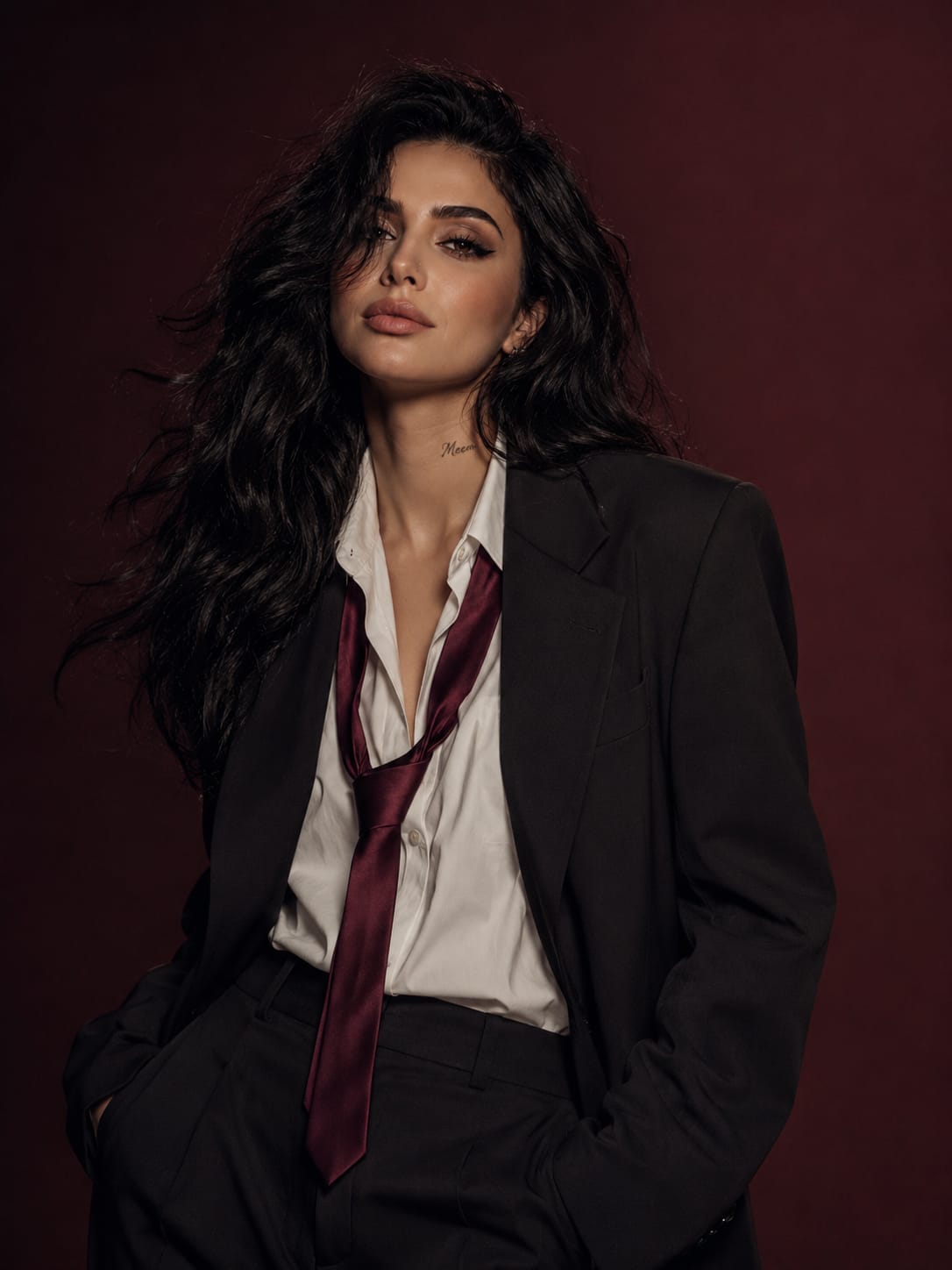
- This case keeps one primary output, so the first image should be treated as the main visual reference.
How The Prompt Is Structured
- The prompt reads as a long, highly specified prompt, which is useful when you want to judge how much specificity this direction needs.
- Its keyword cluster is centered on Portrait, Cinematic, Fashion, so you can usually keep that cluster while swapping subject, camera, layout, or copy details.
- A practical rewrite path is: keep the outcome, keep the strongest style cues, then replace only the subject and environment blocks.
Good Follow-up Questions
- What changes first if you keep Portrait, Cinematic, Fashion but switch the subject matter?
- Which part of the result comes from section-level structure (Character Design) versus tag-level style cues?
- Which related cases in the same section give you a cleaner or more extreme variation of the same direction?
Full Prompt
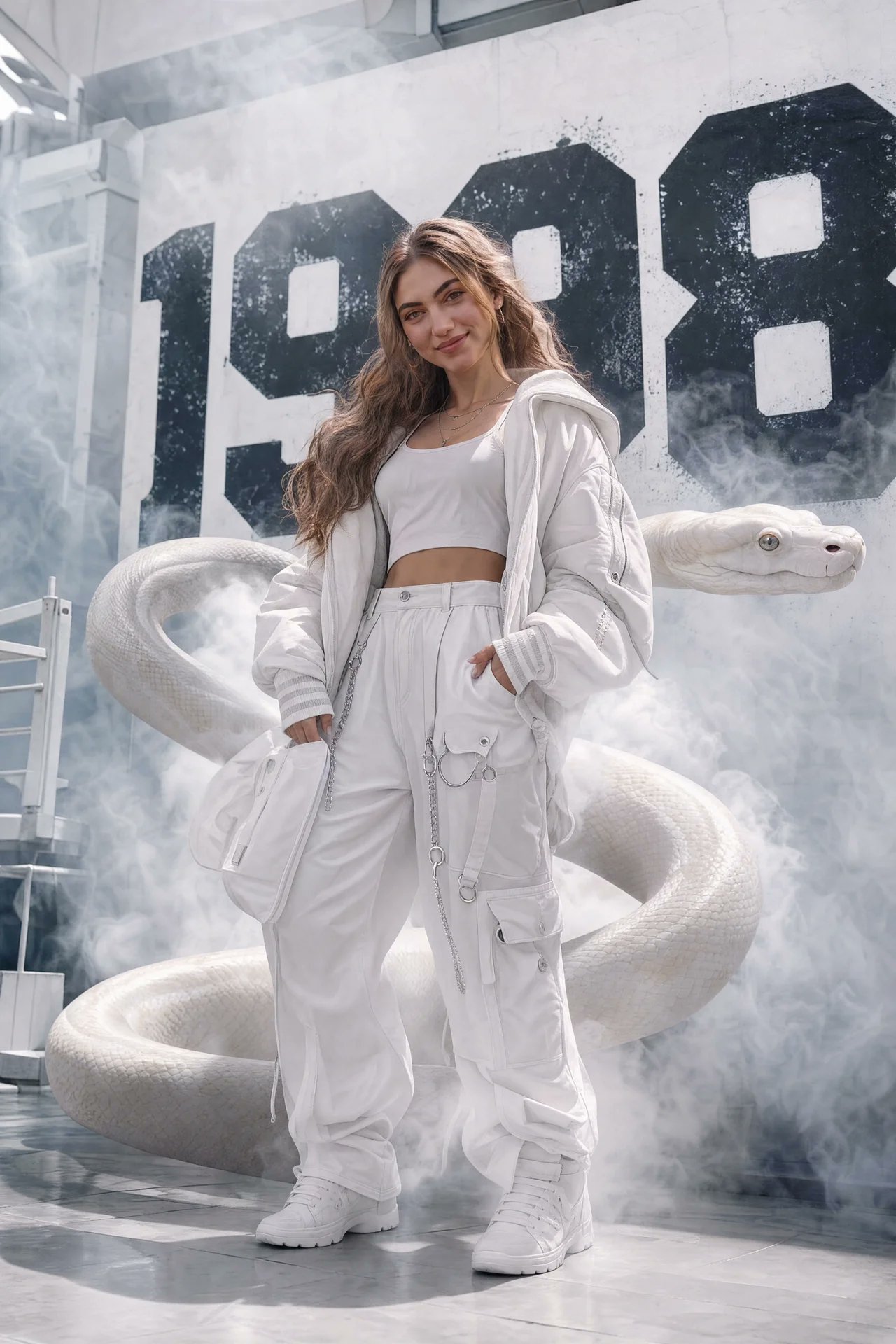
Ultra-realistic high-fashion editorial portrait of a confident, beautiful young woman standing in a monochromatic red urban environment, styled in modern luxury white streetwear. She wears an oversized white bomber jacket, a fitted white crop top, and layered white cargo pants with metallic chains, paired with white tactical sneakers and minimal silver jewelry. Her makeup is subtle and glossy with a soft matte skin texture. She has long, voluminous ash-brown wavy hair with wispy bangs flowing naturally in the wind. A massive realistic albino python emerges behind and wraps partially around her body, subtly integrated within thick swirling white smoke and atmospheric fog. The snake appears lifelike with highly detailed scales, natural muscle tension, realistic reflections, visible texture, sharp eyes, and slight organic movement. The environment is predominantly white — white architecture, white smoke, white wardrobe, white textures, and soft white lighting — creating a clean monochromatic aesthetic. Large distressed black “1998” typography dominates the background in a bold industrial font, acting as the only strong contrasting element. Captured like a luxury fashion campaign: cinematic urban atmosphere, natural skin texture, highly detailed eyes, realistic hair strands, authentic fabric folds, realistic smoke physics, dramatic directional lighting, shallow depth of field, crisp focus, accurate human proportions, modern editorial photography, Vogue magazine aesthetic, street luxury styling, high dynamic range, photorealistic, ultra-detailed, 85mm lens, soft cinematic shadows, studio-quality color grading, real-world textures — no fantasy, no CGI look, no cartoon, no anime style.