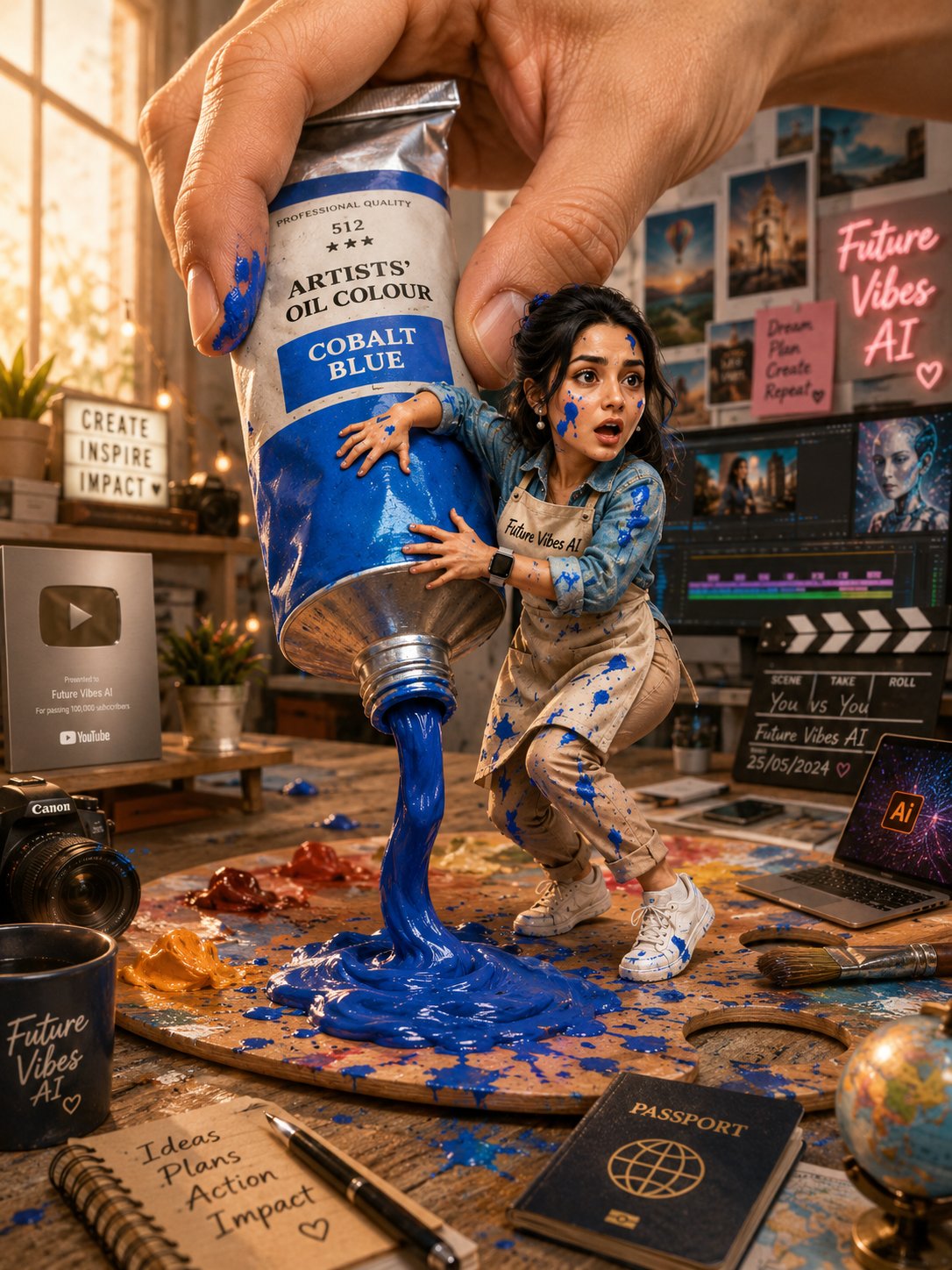
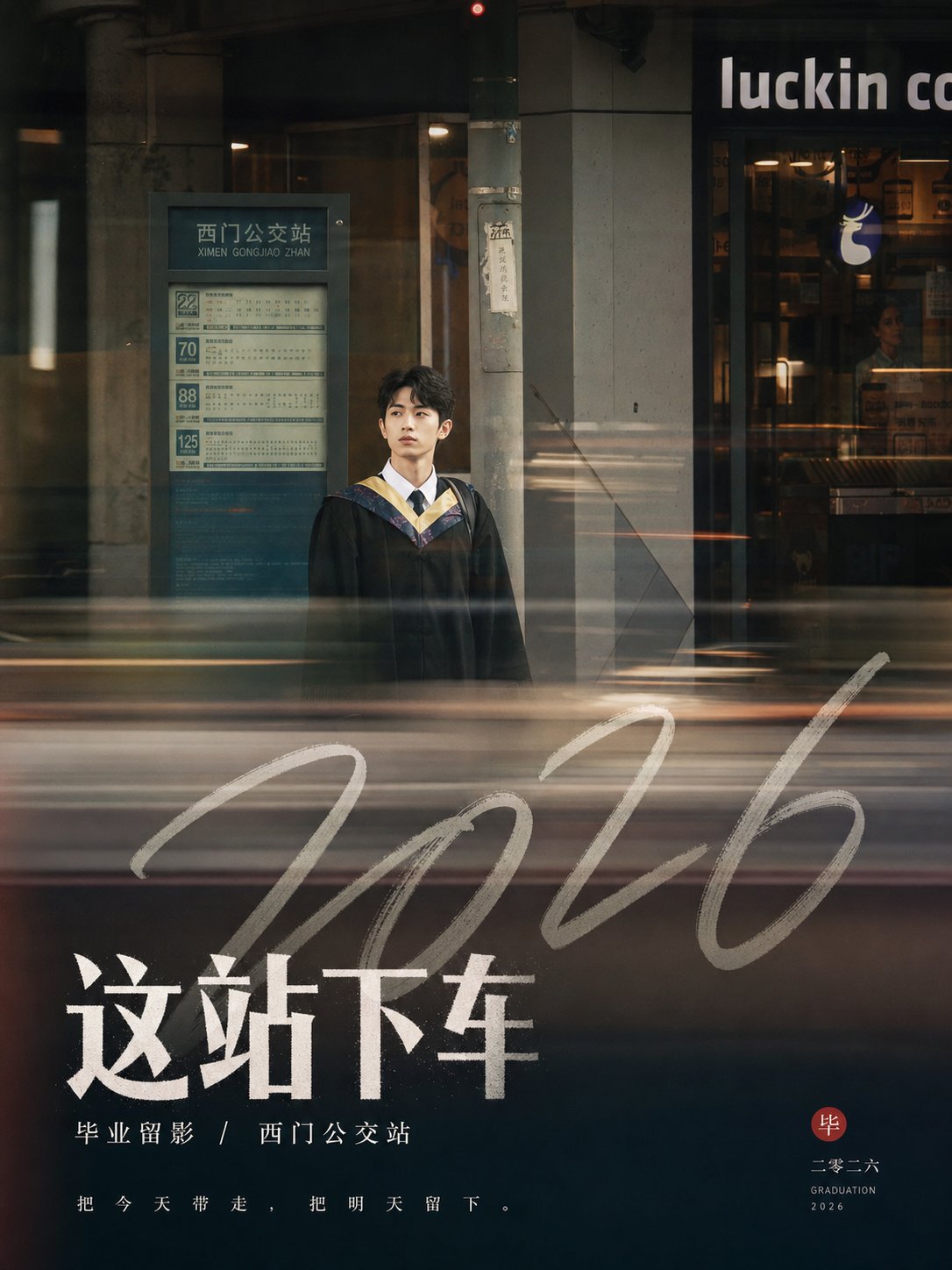
Case Media
Case Notes
This page keeps the media, full prompt, and original source together so you can inspect the result first and decide whether the prompt is worth copying, saving, or comparing.
Case Insights
To make this page easier to search, cite, and reuse later, the case is also broken down into practical guidance about usage, visual cues, and prompt structure.
Best Fit Scenarios
- Use this as a character design benchmark when you need a fast style baseline before rewriting your own prompt.
- It is especially helpful if your target overlaps with 35mm, Neon, Cinematic and you want to judge the image result before tuning wording.
- Keep it as a control sample when you compare nearby prompt variants one variable at a time.
Visual Signals To Notice
- The clearest style signals here are 35mm, Neon, Cinematic, so those should usually stay in your first rewrite.
- Look at silhouette, costume language, mood styling, and whether the character reads clearly at a glance.
- This case keeps one primary output, so the first image should be treated as the main visual reference.
How The Prompt Is Structured
- The prompt reads as a long, highly specified prompt, which is useful when you want to judge how much specificity this direction needs.
- Its keyword cluster is centered on 35mm, Neon, Cinematic, so you can usually keep that cluster while swapping subject, camera, layout, or copy details.
- A practical rewrite path is: keep the outcome, keep the strongest style cues, then replace only the subject and environment blocks.
Good Follow-up Questions
- What changes first if you keep 35mm, Neon, Cinematic but switch the subject matter?
- Which part of the result comes from section-level structure (Character Design) versus tag-level style cues?
- Which related cases in the same section give you a cleaner or more extreme variation of the same direction?
Full Prompt
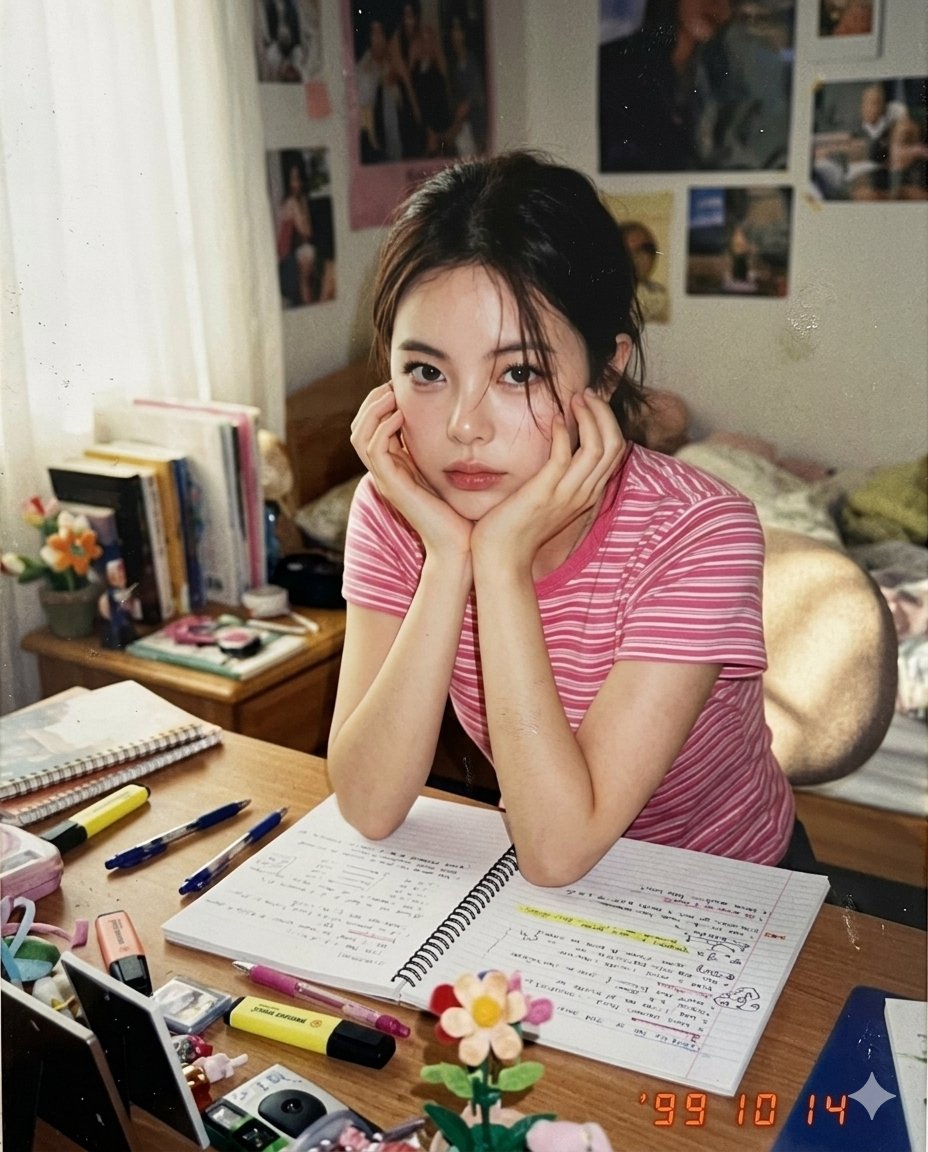
Use the attached image as the primary facial reference with maximum precision. Preserve exact facial structure, natural asymmetry, skin tone, and recognizable identity through all aging and print degradation. A recovered color photograph from an ordinary afternoon sometime in the late 1990s or early 2000s. Captured on a cheap disposable camera and rediscovered decades later inside a family photo album before being scanned into an untouched JPEG. The subject is sitting at a study desk covered with notebooks, doodles, stationery, and small everyday clutter while taking a break from writing or homework. Someone nearby casually points a camera toward her and snaps a photograph before she realizes it. She rests her chin on both hands while looking toward the photographer with a quiet, distracted expression. The moment feels completely ordinary, like a forgotten afternoon that nobody expected to remember years later. OUTFIT: Pink striped fitted short-sleeve shirt. HAIR: Long dark hair with natural movement. A few loose strands drift across the forehead and cheeks. Hair should never appear stiff, perfectly arranged, or frozen in place. ENVIRONMENT: A modest bedroom study corner with notebooks, handwritten notes, stationery, flower decorations, small personal keepsakes, and everyday objects scattered naturally across the desk. The space feels lived-in, personal, and slightly cluttered. LIGHT BEHAVIOR: Soft afternoon window light mixed with weak disposable-camera flash. The flash slightly brightens the face and foreground while failing to fully overpower the ambient room light. CAMERA & FILM CHARACTERISTICS: Cheap disposable-camera optics, soft corners, visible film grain, slight barrel distortion, mild focus inconsistency, weak flash power, subtle chromatic aberration, imperfect consumer-grade image quality. PHOTO AGING & RECOVERY: Authentic recovered-photo aging. Glossy photo-paper texture remains visible beneath the image. Fine dust particles, tiny scratches, paper fibers, scanner artifacts, faint fingerprint marks, mild gloss deterioration, soft amber warming, uneven fading, subtle dye migration, gentle heat-aging, and faint smoke-like discoloration distributed naturally across the entire photograph. The aging feels organic and affects the whole print rather than a single corner. COLOR SCIENCE: Authentic late-1990s consumer print film palette with warm paper-yellowing, olive-shifted greens, softened blues, charcoal-brown shadows, and naturally preserved skin tones. COMPOSITION: Handheld snapshot framing with a subtle dutch tilt. Subject occupies roughly 70–75% of the frame. Desk objects create natural foreground layering with slightly awkward cropping and casual family-photo energy. --ar 4:5 Negative prompt: modern smartphone quality, HDR processing, beauty filter, AI skin smoothing, plastic skin, cinematic color grading, neon colors, perfect composition, professional studio lighting, influencer pose, dramatic fire damage, text, watermark, logo, distorted anatomy, extra fingers, fused fingers.