Case Media
Case Notes
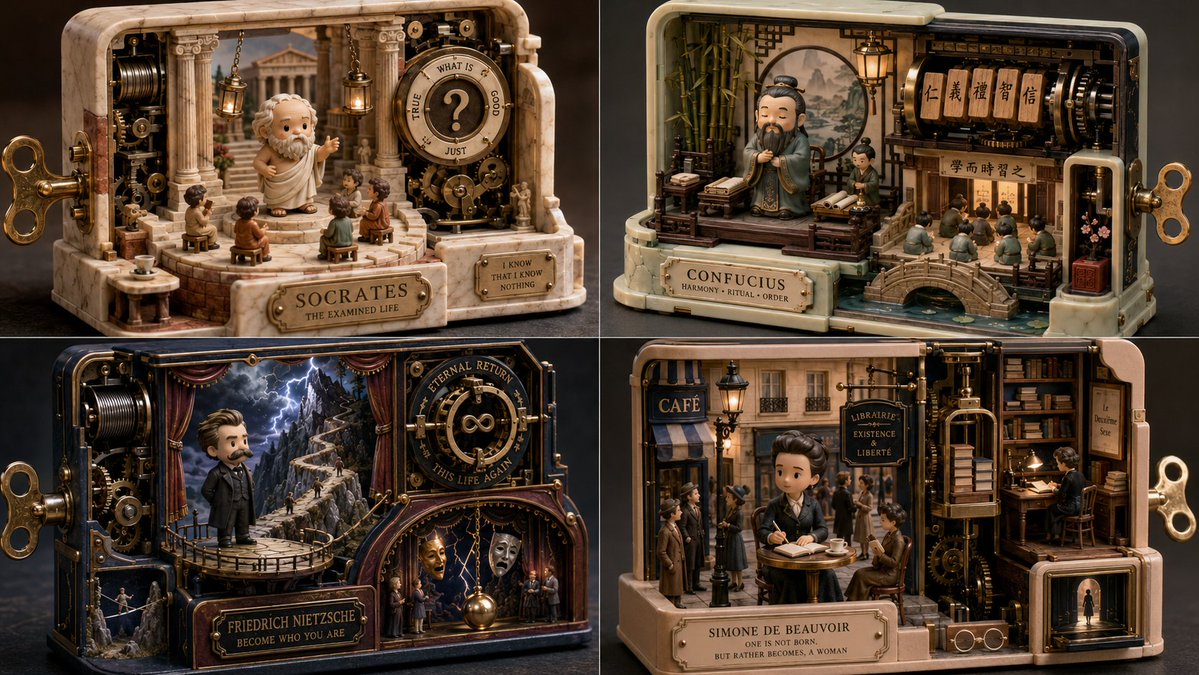
This page keeps the media, full prompt, and original source together so you can inspect the result first and decide whether the prompt is worth copying, saving, or comparing.
Case Insights
To make this page easier to search, cite, and reuse later, the case is also broken down into practical guidance about usage, visual cues, and prompt structure.
Best Fit Scenarios
- Use this as a character design benchmark when you need a fast style baseline before rewriting your own prompt.
- It is especially helpful if your target overlaps with Character, Product, Character Design and you want to judge the image result before tuning wording.
- Keep it as a control sample when you compare nearby prompt variants one variable at a time.
Visual Signals To Notice
- The clearest style signals here are Character, Product, Character Design, so those should usually stay in your first rewrite.
- Look at silhouette, costume language, mood styling, and whether the character reads clearly at a glance.
- This case keeps one primary output, so the first image should be treated as the main visual reference.
How The Prompt Is Structured
- The prompt reads as a long, highly specified prompt, which is useful when you want to judge how much specificity this direction needs.
- Its keyword cluster is centered on Character, Product, Character Design, so you can usually keep that cluster while swapping subject, camera, layout, or copy details.
- A practical rewrite path is: keep the outcome, keep the strongest style cues, then replace only the subject and environment blocks.
Good Follow-up Questions
- What changes first if you keep Character, Product, Character Design but switch the subject matter?
- Which part of the result comes from section-level structure (Character Design) versus tag-level style cues?
- Which related cases in the same section give you a cleaner or more extreme variation of the same direction?
Full Prompt
create a charming but ultra-refined scene centered on {argument name="subject" default="wind-up toy / mechanical miniature world"} where a tiny self-contained world is powered by a visible wind-up key and internal spring system. the toy should contain miniature architecture, characters, moving scenery, rotating signage, tiny lifts, oscillating parts, and small narrative moments that all activate from one central mechanism. mini world features: include visual zones for {argument name="main scene" default="main scene"}, [secondary scene], [moving prop], [character action], and [secret detail / easter egg]. surrounding close-ups can reveal the key, spring chamber, cams, and hidden moving linkages. visual style: japanese capsule toy magic meets luxury miniature cinematography meets premium collectible product photography. whimsical, intricate, emotionally irresistible. composition guidelines: the toy remains the hero, but the viewer should feel invited to peer into its tiny world. balance cuteness with high craftsmanship. make the mechanisms visible enough to create fascination. lighting & background: soft studio lighting with theatrical micro-shadows, premium pastel, lacquer, or dark velvet backdrop depending on {argument name="mood" default="mood"}, hyper-detailed miniature realism, no watermark.