Case Media
Case Notes
This page keeps the media, full prompt, and original source together so you can inspect the result first and decide whether the prompt is worth copying, saving, or comparing.
Case Insights
To make this page easier to search, cite, and reuse later, the case is also broken down into practical guidance about usage, visual cues, and prompt structure.
Best Fit Scenarios
- Use this as a character design benchmark when you need a fast style baseline before rewriting your own prompt.
- It is especially helpful if your target overlaps with Fashion, Poster, Illustration and you want to judge the image result before tuning wording.
- Keep it as a control sample when you compare nearby prompt variants one variable at a time.
Visual Signals To Notice
- The clearest style signals here are Fashion, Poster, Illustration, so those should usually stay in your first rewrite.
- Look at silhouette, costume language, mood styling, and whether the character reads clearly at a glance.
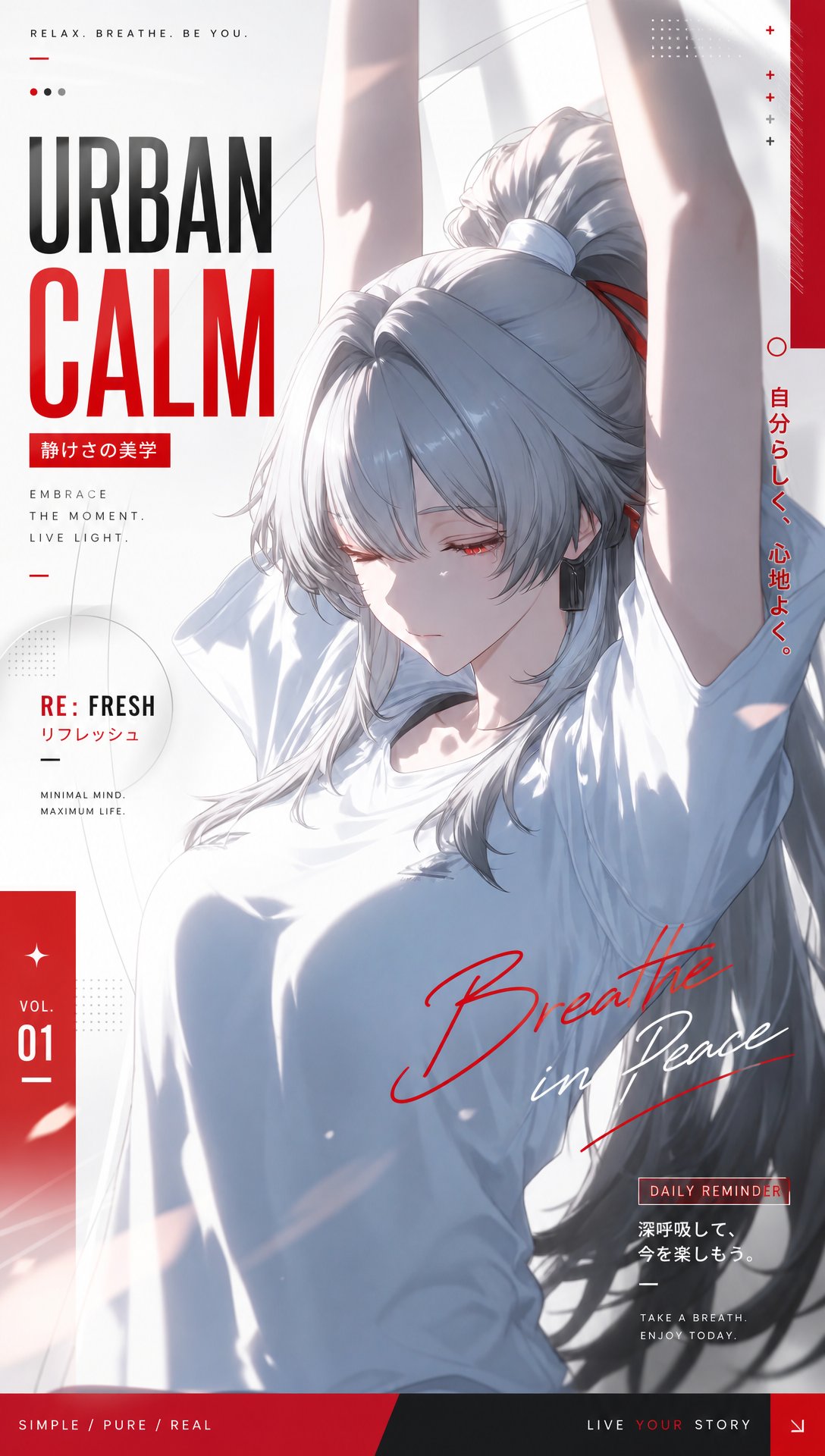
- This case keeps one primary output, so the first image should be treated as the main visual reference.
How The Prompt Is Structured
- The prompt reads as a long, highly specified prompt, which is useful when you want to judge how much specificity this direction needs.
- Its keyword cluster is centered on Fashion, Poster, Illustration, so you can usually keep that cluster while swapping subject, camera, layout, or copy details.
- A practical rewrite path is: keep the outcome, keep the strongest style cues, then replace only the subject and environment blocks.
Good Follow-up Questions
- What changes first if you keep Fashion, Poster, Illustration but switch the subject matter?
- Which part of the result comes from section-level structure (Character Design) versus tag-level style cues?
- Which related cases in the same section give you a cleaner or more extreme variation of the same direction?
Full Prompt
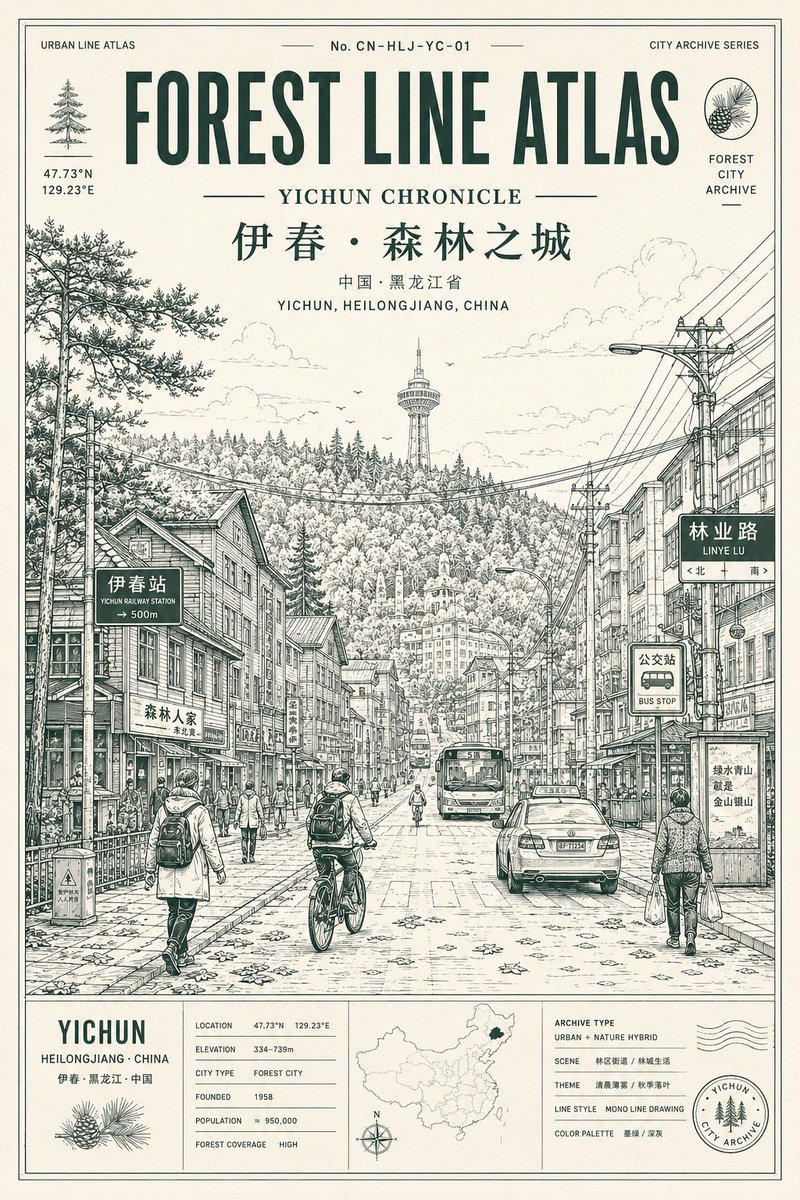
Please generate a high-quality "Urban Line Atlas Poster." This image is designed based on the visual language of a "monochrome urban line-drawing travel poster," featuring a complete composition with a large top title, mid-view street depth, core landmarks, flanking buildings, foreground figures, and a bottom signature block. [Theme City] City Name: {argument name="city" default="Yichun"} English Main Title: {argument name="English title" default="FOREST LINE ATLAS / YICHUN CHRONICLE"} Chinese Title: Yichun · City of Forests Country/Region: Heilongjiang Province, China Core Landmarks: Lesser Khingan Mountains forest, Korean pine forest sea, Wuying National Forest Park observation tower Street Scene: Small forest town streets, residential intersections with wooden buildings, forestry city atmosphere Emotional Theme: Commuting moments in the morning mist Main Color Tone: {argument name="main color" default="dark green + dark grey line drawing"} Aspect Ratio: 3:4 vertical [Overall Positioning] This is a work that serves as a travel souvenir poster, an urban visual guide, an architectural line manuscript, and an editorial design cover. The image needs to present Yichun's unique temperament as a "city in the forest," with both urban recognition and a sense of real street life—not a standard travel poster or a single landmark illustration, but a visual archive piece of collectible value. [Composition Design] The top is a strong title area using the large English title "FOREST LINE ATLAS," supplemented by the subtitle "YICHUN CHRONICLE." A numbering system (e.g., No. CN-HLJ-YC-01) and brief coordinate info can be added, with a modern and design-oriented layout. The middle is the urban street主体, using a deep street perspective composition with a slightly low angle, the road extending into the distance and gradually entering the forest area. The core landmark is the forest observation tower or the silhouette of the Lesser Khingan forest in the distance, clear but not overly prominent, naturally blending into the street scene. Add local architectural details on both sides: wooden houses, forestry bureau-style buildings, residential blocks, small shops, bus stops, streetlights, utility poles, simple road signs, etc., forming high-density urban information. The foreground includes lifestyle elements: pedestrians in autumn/winter clothing, people on bicycles, residents with shopping bags, small vehicles, and fallen leaves on the ground to enhance the seasonal atmosphere. A separate signature area at the bottom is designed as a city archive label structure, containing "YICHUN / HEILONGJIANG / CHINA" and a simplified city info module or map index-style layout. [Text System] The top main title is clear and eye-catching. Keep only 2–4 clear readable texts in the image (e.g., "Yichun Station," "Forestry Road," "Bus Stop"), with other signs using abstracted Chinese strokes or symbolic characters to avoid gibberish. The overall text system should be unified, restrained, and integrated into the design structure. [Visual Style] The overall style uses monochrome or a very limited two-color line drawing on an off-white or warm white paper texture. Lines are precise, clean, and layered, with the feel of an architectural pen manuscript and screen print texture. Foreground lines are slightly thicker, background lines thinner, with figures and objects being simple but recognizable. The style is restrained and sophisticated. [Innovation Requirements] Incorporate design variations in: title naming system, top layout structure, slightly low-angle street perspective, fusion composition of forest and city, bottom archive-style information module, and expression of autumn fallen leaf atmosphere. [Avoidance Matters] No ordinary travel poster style, no watercolor, impasto, or cartoon/chibi styles, no cyberpunk, no high-saturation colors, and no cheap souvenir style. Please generate an independent, complete, high-definition, clear-lined vertical urban line-drawing poster with a sense of collectability and series identity.