Case Media
Case Notes
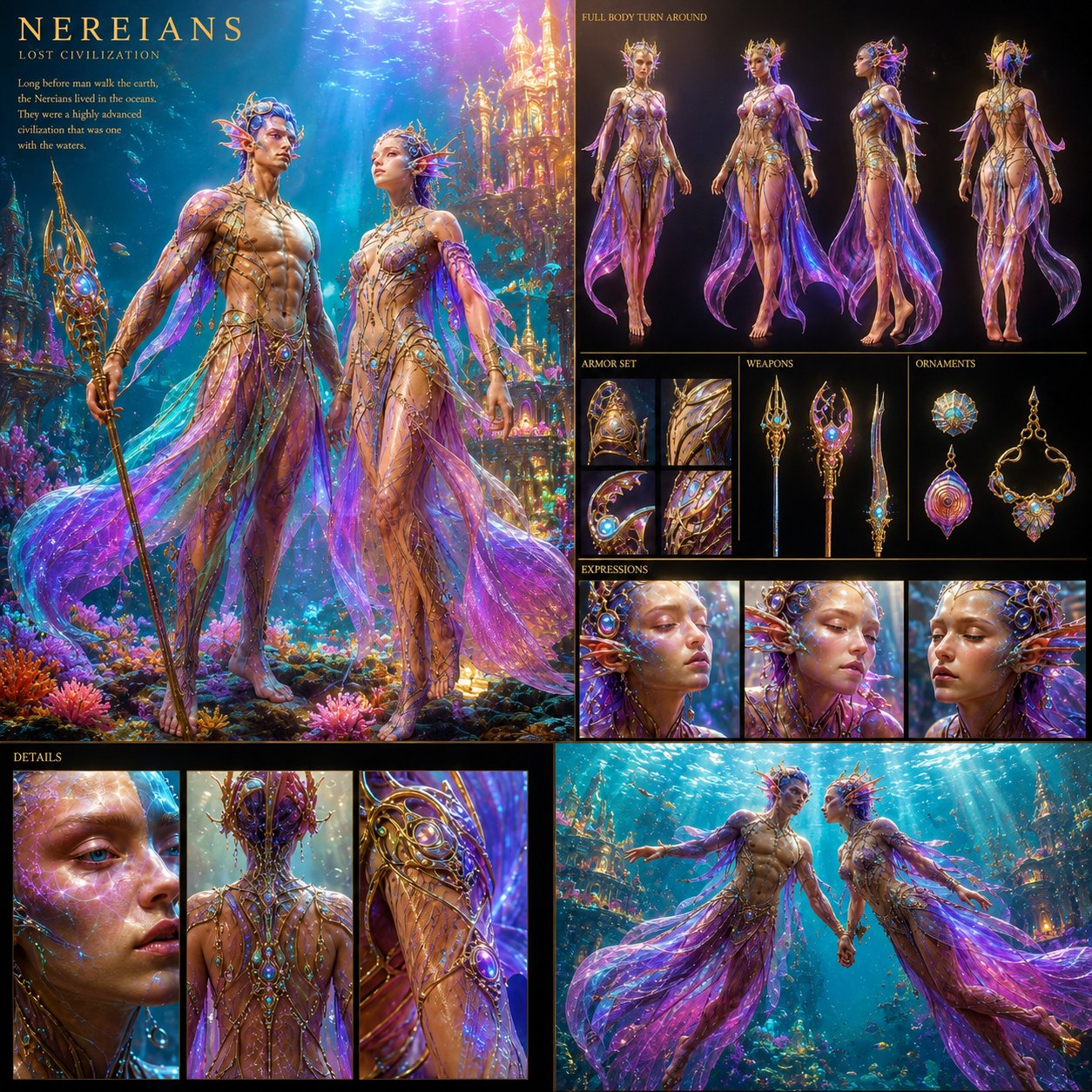
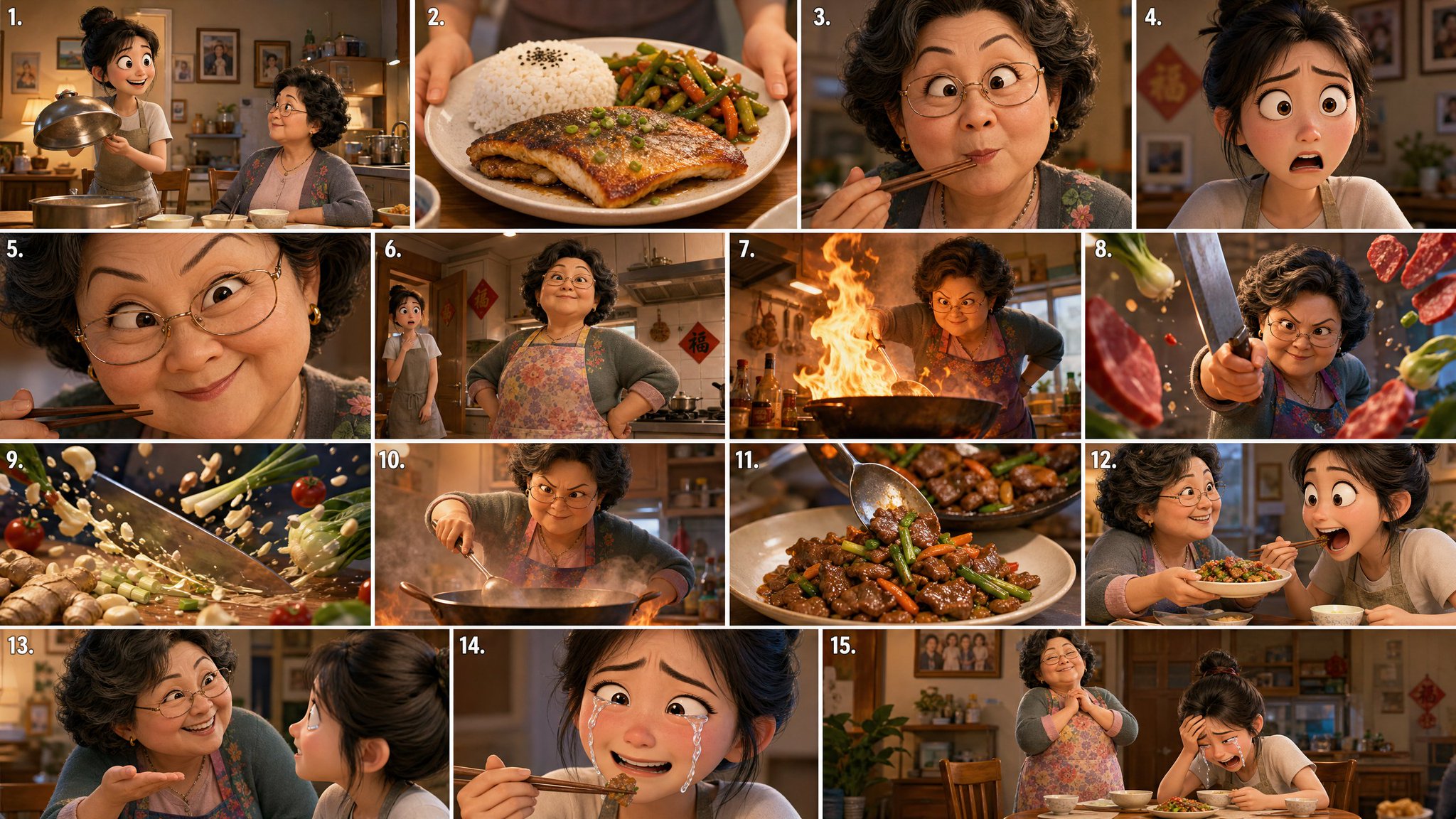
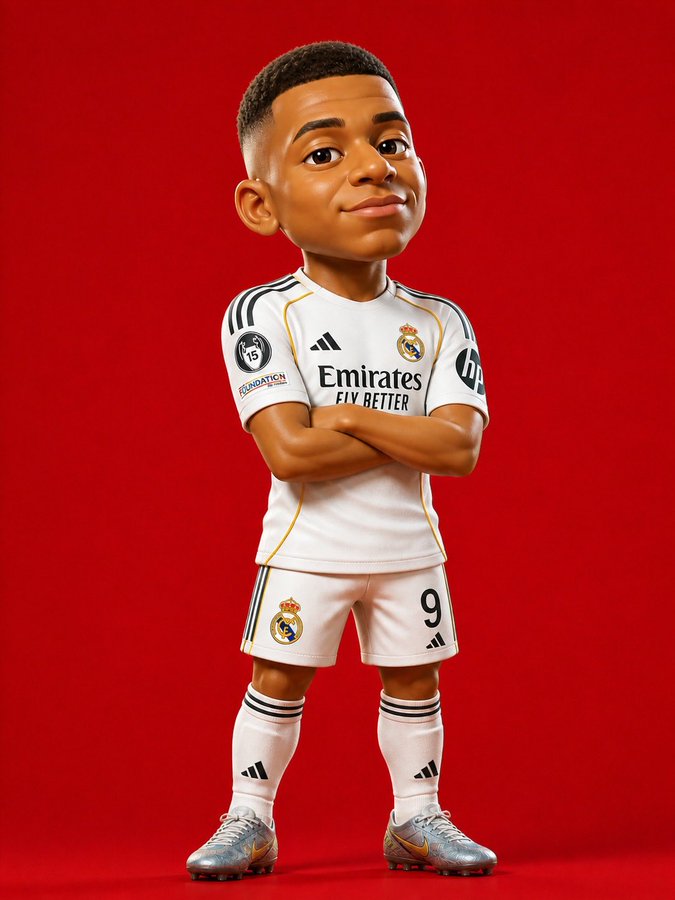
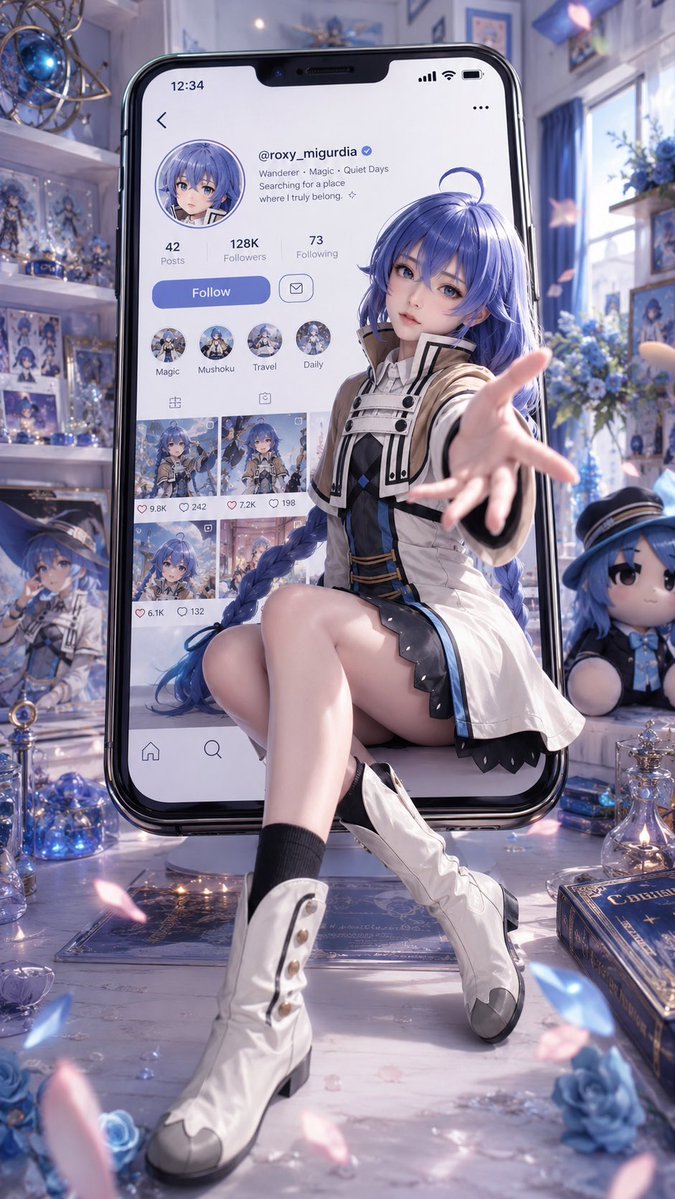
This page keeps the media, full prompt, and original source together so you can inspect the result first and decide whether the prompt is worth copying, saving, or comparing.
Case Insights
To make this page easier to search, cite, and reuse later, the case is also broken down into practical guidance about usage, visual cues, and prompt structure.
Best Fit Scenarios
- Use this as a character design benchmark when you need a fast style baseline before rewriting your own prompt.
- It is especially helpful if your target overlaps with Cinematic, Character, Character Design and you want to judge the image result before tuning wording.
- Keep it as a control sample when you compare nearby prompt variants one variable at a time.
Visual Signals To Notice
- The clearest style signals here are Cinematic, Character, Character Design, so those should usually stay in your first rewrite.
- Look at silhouette, costume language, mood styling, and whether the character reads clearly at a glance.
- This case keeps one primary output, so the first image should be treated as the main visual reference.
How The Prompt Is Structured
- The prompt reads as a long, highly specified prompt, which is useful when you want to judge how much specificity this direction needs.
- Its keyword cluster is centered on Cinematic, Character, Character Design, so you can usually keep that cluster while swapping subject, camera, layout, or copy details.
- A practical rewrite path is: keep the outcome, keep the strongest style cues, then replace only the subject and environment blocks.
Good Follow-up Questions
- What changes first if you keep Cinematic, Character, Character Design but switch the subject matter?
- Which part of the result comes from section-level structure (Character Design) versus tag-level style cues?
- Which related cases in the same section give you a cleaner or more extreme variation of the same direction?
Full Prompt
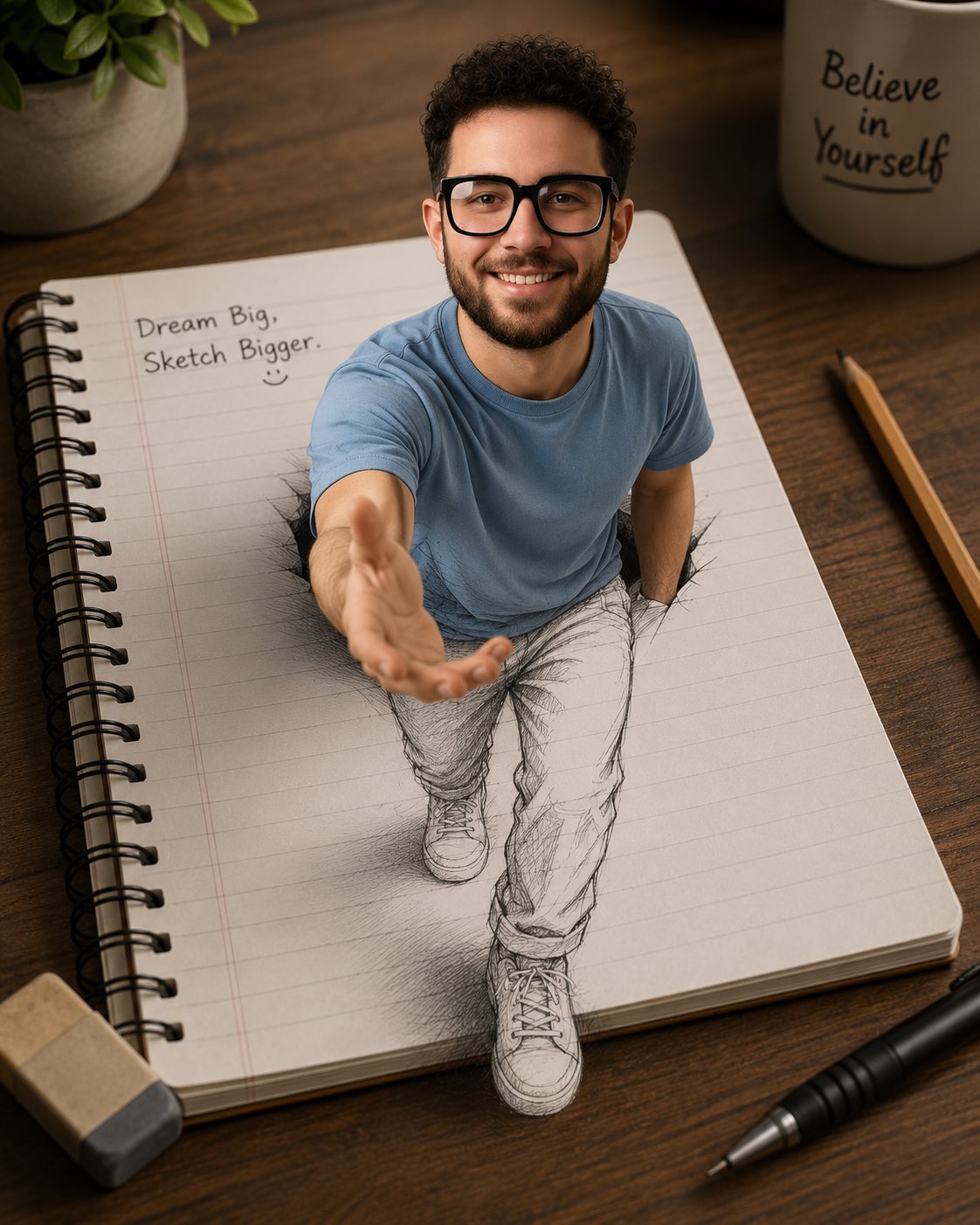
{ "prompt": "A creative 3D illusion artwork of the young man from the reference photo stepping out of a spiral notebook page placed on a wooden desk. Preserve the exact facial features, hairstyle, beard, smile, skin tone, facial structure, and black rectangular eyeglasses from the reference image with extremely high facial accuracy and identity consistency. The character appears as a semi-realistic 3D cartoon version of the reference person, featuring curly dark hair, a neatly groomed beard, expressive eyes behind black glasses, and a warm friendly smile. He is wearing a casual pastel blue t-shirt, light grey jeans, and clean white sneakers. His lower body is illustrated as a detailed pencil sketch on the notebook page, while his upper body is fully rendered in realistic 3D and dramatically emerging from the paper, creating a strong pop-out illusion effect. One hand reaches toward the viewer, enhancing the depth illusion. The spiral notebook rests on a realistic wooden desk surrounded by stationery items including a pencil, pen, eraser, and a small plant, creating a creative workspace atmosphere. Handwritten motivational text appears at the top of the notebook page. Ultra-detailed 3D rendering, realistic lighting, soft cinematic shadows, depth illusion, photorealistic textures, shallow depth of field, whimsical and imaginative concept art, masterpiece quality, professional CGI, highly detailed, volumetric lighting, 8K resolution, studio-quality render.", "negative_prompt": "low quality, blurry, distorted face, incorrect facial features, extra fingers, extra limbs, bad anatomy, duplicate body parts, cropped image, low resolution, overexposed, underexposed, unrealistic proportions, poorly drawn hands, deformed eyes, mismatched glasses, missing beard, cartoonish face, watermark, text artifacts, noise", "aspect_ratio": "4:5", "style": "photorealistic 3D CGI", "quality": "ultra", "lighting": "cinematic soft lighting", "camera": { "angle": "top-down perspective", "depth_of_field": "shallow", "focus": "face and upper body" } }