Case Media
Case Notes
This page keeps the media, full prompt, and original source together so you can inspect the result first and decide whether the prompt is worth copying, saving, or comparing.
Case Insights
To make this page easier to search, cite, and reuse later, the case is also broken down into practical guidance about usage, visual cues, and prompt structure.
Best Fit Scenarios
- Use this as a character design benchmark when you need a fast style baseline before rewriting your own prompt.
- It is especially helpful if your target overlaps with Fashion, Poster, Character and you want to judge the image result before tuning wording.
- Keep it as a control sample when you compare nearby prompt variants one variable at a time.
Visual Signals To Notice
- The clearest style signals here are Fashion, Poster, Character, so those should usually stay in your first rewrite.
- Look at silhouette, costume language, mood styling, and whether the character reads clearly at a glance.
- This case keeps 4 media outputs, which makes it easier to check whether the style remains stable across multiple results.
How The Prompt Is Structured
- The prompt reads as a long, highly specified prompt, which is useful when you want to judge how much specificity this direction needs.
- Its keyword cluster is centered on Fashion, Poster, Character, so you can usually keep that cluster while swapping subject, camera, layout, or copy details.
- A practical rewrite path is: keep the outcome, keep the strongest style cues, then replace only the subject and environment blocks.
Good Follow-up Questions
- What changes first if you keep Fashion, Poster, Character but switch the subject matter?
- Which part of the result comes from section-level structure (Character Design) versus tag-level style cues?
- Which related cases in the same section give you a cleaner or more extreme variation of the same direction?
Full Prompt
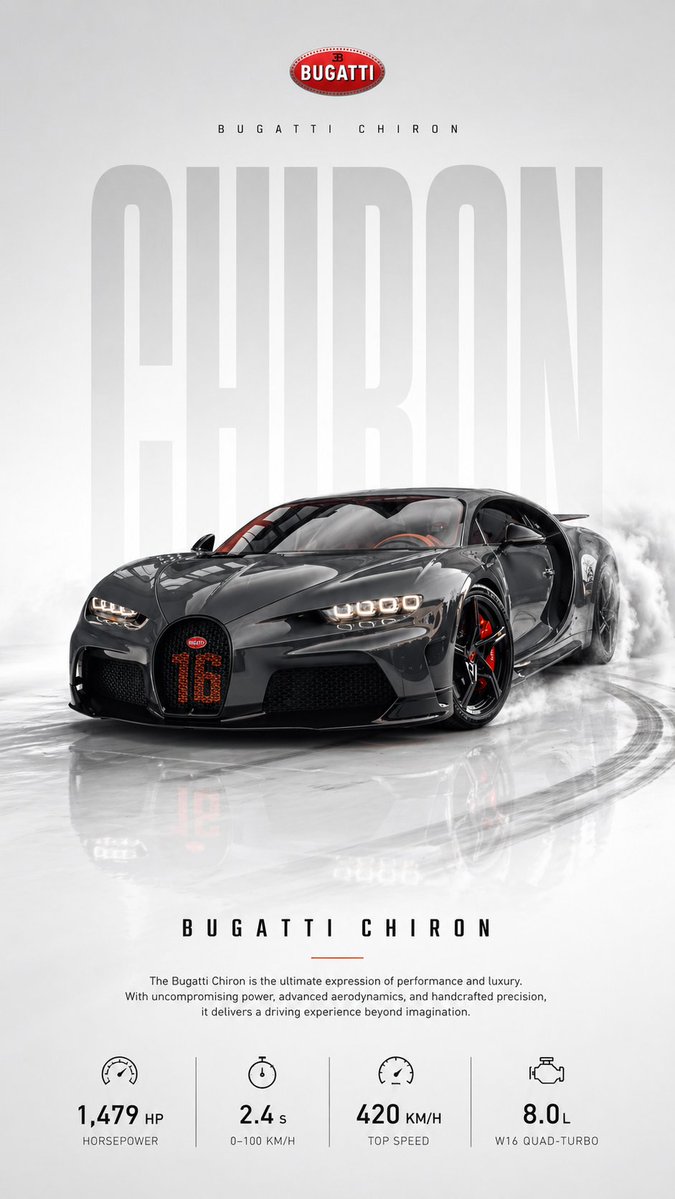
Ultra-clean automotive poster featuring the exact same car as the photo that will be provided later. The AI must replicate the car from the uploaded photo with identical body shape, proportions, stance, color, trims, wheels, and all visible exterior details. The car is presented in a front three-quarter angle facing right, matching the perspective of the original reference layout, but now depicted in a subtle {argument name="action" default="drifting action"}. The drift is expressed through realistic weight transfer, slight body lift, controlled smoke plumes from the rear tires, and faint curved tire marks behind the vehicle, without distorting the original car’s geometry. Headlights follow the exact style from the reference photo of the car, with optional warm fog lights glowing if the provided car has them. All decals, emblems, plates, and window tints must match the car from the uploaded photo. The car drifts on a glossy white reflective studio-like floor that maintains soft reflections and realistic shadows, enhanced with light drift skid reflections and directional smudges. Background remains a clean white-to-light-gray gradient with a giant semi-transparent bold typography of the car model name (auto-extracted from the uploaded photo) vertically dominating the background. At the very top: clean branding text “{argument name="brand name" default="CAR COMPANY NAME"}” (or the brand detected from the uploaded car photo). Under it, spaced-out stylized tracking text containing the same brand and model name. Below the car: centered title of the exact model name from the uploaded photo. Under that, a short descriptive paragraph about the car’s character (efficiency, style, reliability). Bottom section shows a clean grid layout of specifications. If real specs are known from the detected car model, generate accurate values; if not, generate placeholders in the same layout style (4 columns: horsepower, 0–100 km/h, top speed, engine displacement/fuel type). Entire poster is minimalist, editorial, high-key studio lighting with ultra-sharp reflections, crisp shadows, modern typography, and 4K believability, blending clean design with dynamic drifting energy, Ratio 9:16