Case Media
Case Notes
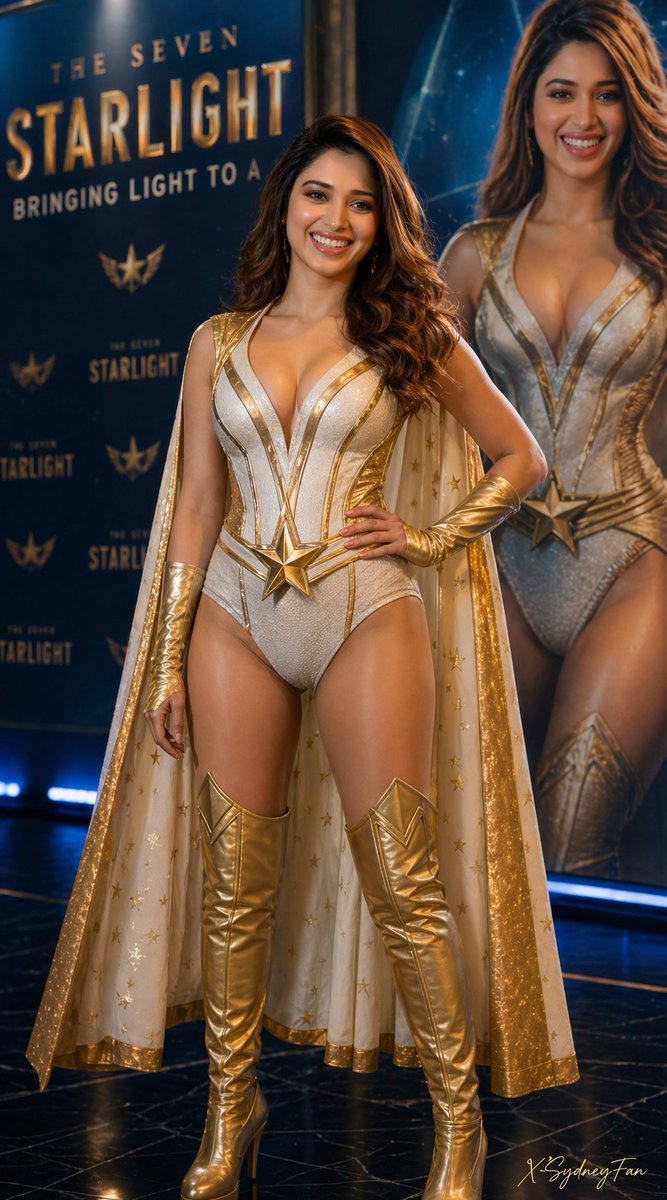
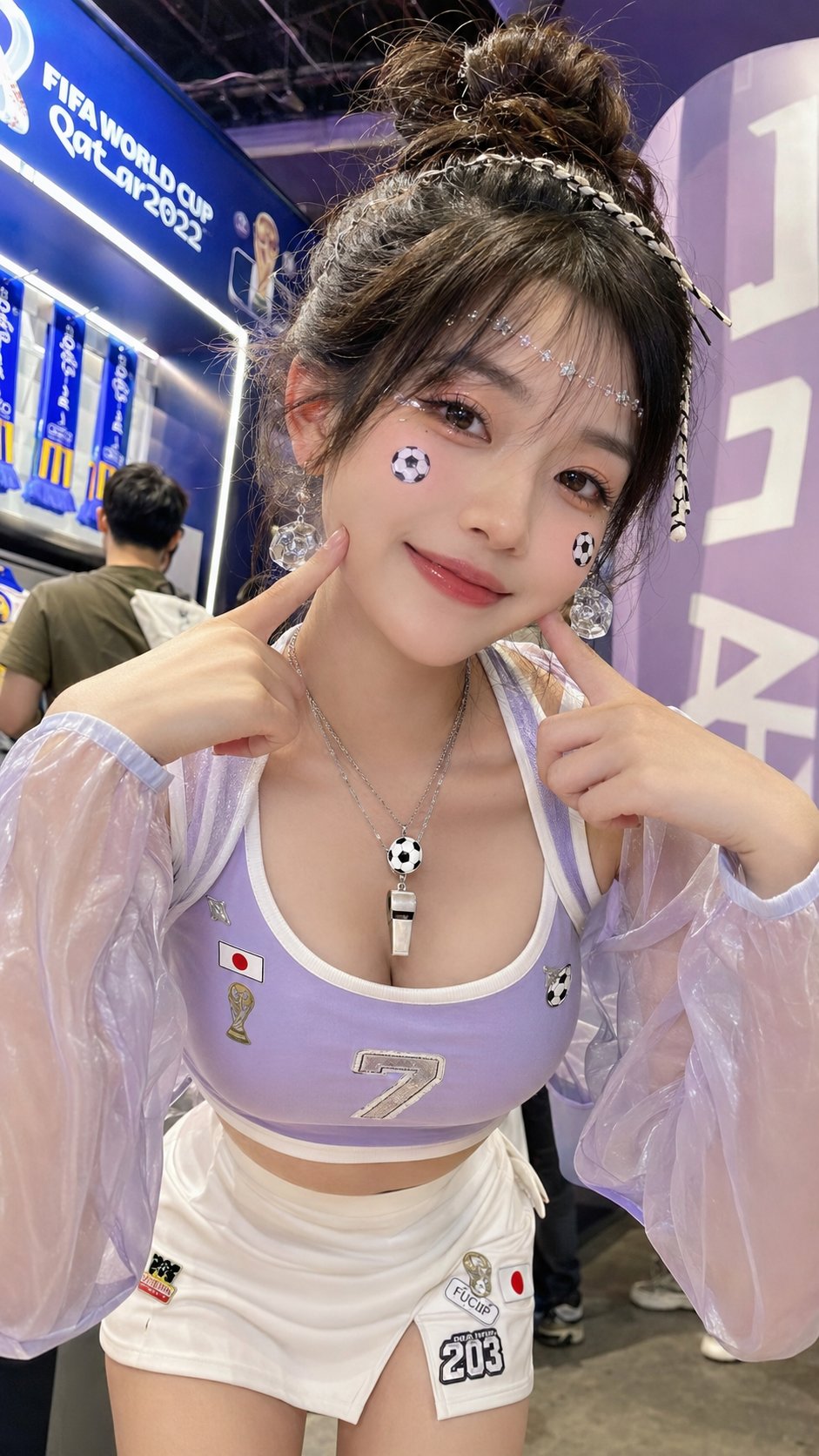
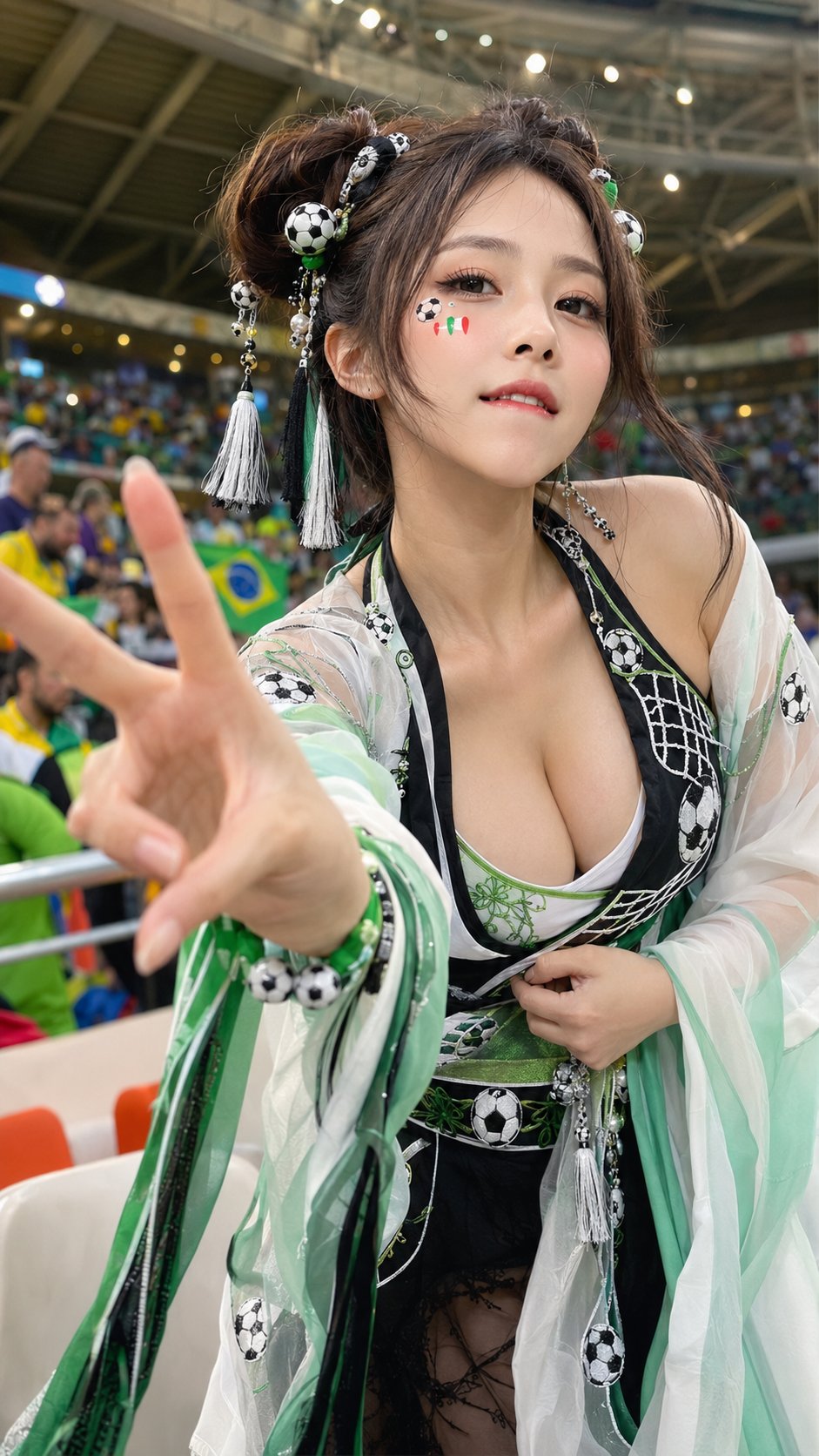
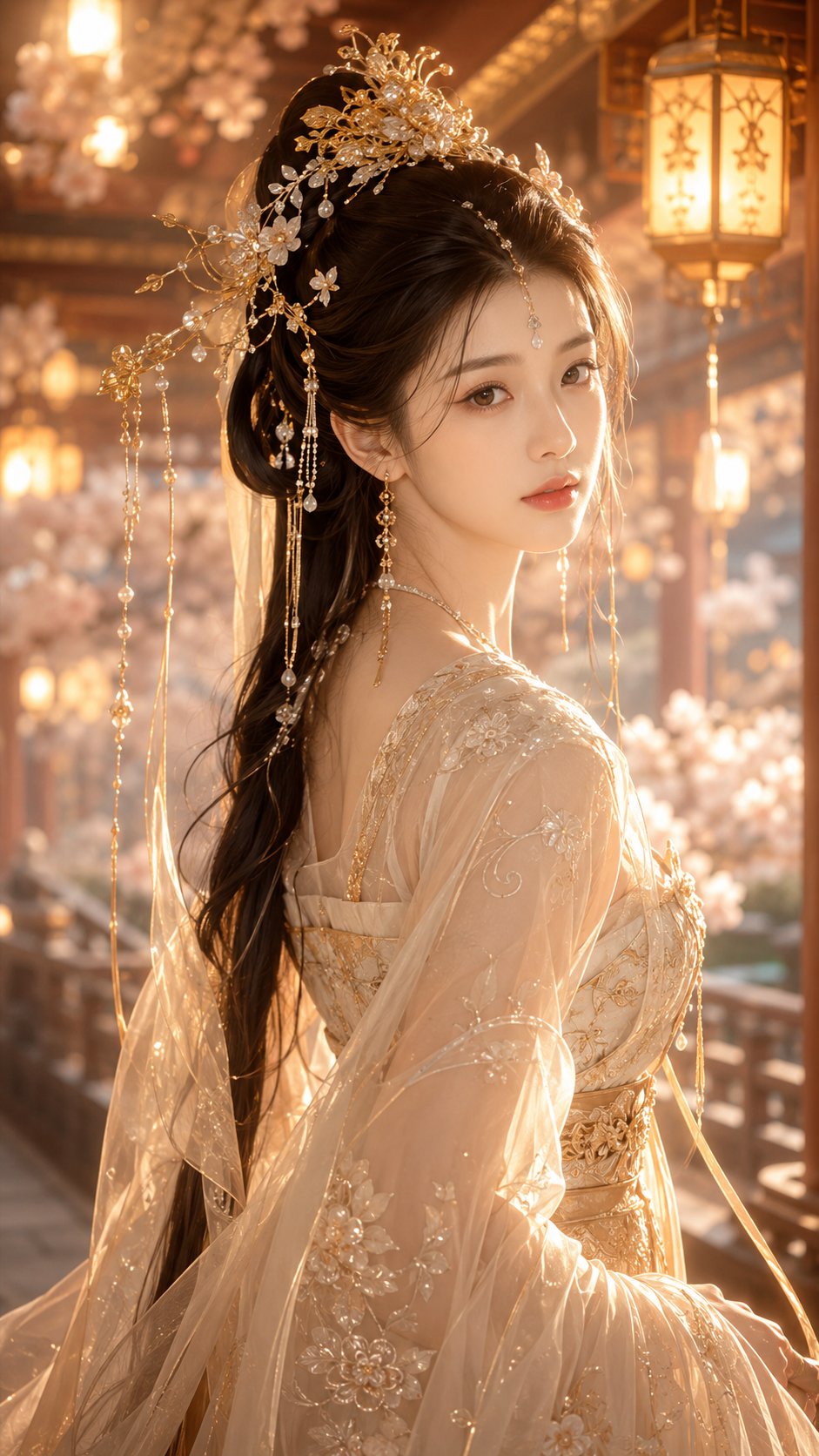
This page keeps the media, full prompt, and original source together so you can inspect the result first and decide whether the prompt is worth copying, saving, or comparing.
Case Insights
To make this page easier to search, cite, and reuse later, the case is also broken down into practical guidance about usage, visual cues, and prompt structure.
Best Fit Scenarios
- Use this as a character design benchmark when you need a fast style baseline before rewriting your own prompt.
- It is especially helpful if your target overlaps with Portrait, Cinematic, Poster and you want to judge the image result before tuning wording.
- Keep it as a control sample when you compare nearby prompt variants one variable at a time.
Visual Signals To Notice
- The clearest style signals here are Portrait, Cinematic, Poster, so those should usually stay in your first rewrite.
- Look at silhouette, costume language, mood styling, and whether the character reads clearly at a glance.
- This case keeps one primary output, so the first image should be treated as the main visual reference.
How The Prompt Is Structured
- The prompt reads as a long, highly specified prompt, which is useful when you want to judge how much specificity this direction needs.
- Its keyword cluster is centered on Portrait, Cinematic, Poster, so you can usually keep that cluster while swapping subject, camera, layout, or copy details.
- A practical rewrite path is: keep the outcome, keep the strongest style cues, then replace only the subject and environment blocks.
Good Follow-up Questions
- What changes first if you keep Portrait, Cinematic, Poster but switch the subject matter?
- Which part of the result comes from section-level structure (Character Design) versus tag-level style cues?
- Which related cases in the same section give you a cleaner or more extreme variation of the same direction?
Full Prompt
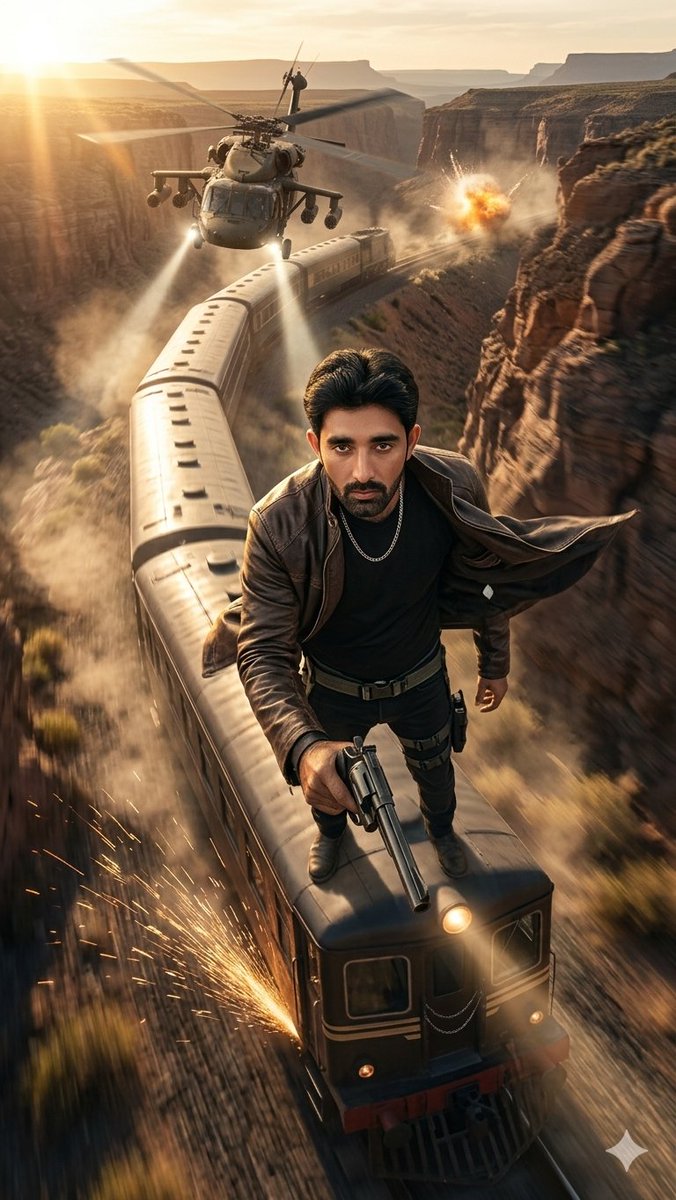
Create a surreal cinematic action portrait in a vertical 9:16 frame, viewed from an impossible high top-down drone angle above a speeding vintage train racing through a narrow desert canyon at sunset. In the foreground, show {argument name="main character" default="a rugged male action hero"} standing powerfully on the roof of the front locomotive car, body facing forward with a confident stance, wearing {argument name="outfit" default="a dark brown leather jacket blowing in the wind, black shirt, black pants, tactical belt, boots, and a silver chain necklace"}. His face should be intentionally obscured or softly blurred, while his hair is dark and neatly styled. He holds exactly 1 revolver pointed downward in his right hand, with a holster strapped to one thigh. The train should have exactly 1 visible front headlight glowing, a dark vintage engine front with windows and grill, and multiple connected passenger cars curving away into the canyon. Behind him, include exactly 1 military helicopter hovering low above the train with exactly 2 bright searchlight beams aimed down onto the cars. Add exactly 1 fiery explosion on the canyon wall/trackside in the middle distance, plus sparks bursting from the train wheels or rails in the lower left foreground. Environment: red-rock canyon cliffs on both sides, dusty air, motion blur from extreme speed, warm golden-hour sun low on the horizon, dramatic lens flare, volumetric haze, flying dust trails, cinematic blockbuster realism. Use a dynamic wide-angle perspective with the hero large in the lower center, helicopter and explosion behind him, intense depth, high contrast, sharp photoreal detail, epic action-movie color grading, no text, no logos, no watermark.