Case Media
Case Notes
This page keeps the media, full prompt, and original source together so you can inspect the result first and decide whether the prompt is worth copying, saving, or comparing.
Case Insights
To make this page easier to search, cite, and reuse later, the case is also broken down into practical guidance about usage, visual cues, and prompt structure.
Best Fit Scenarios
- Use this as a character design benchmark when you need a fast style baseline before rewriting your own prompt.
- It is especially helpful if your target overlaps with Cinematic, Poster, Character and you want to judge the image result before tuning wording.
- Keep it as a control sample when you compare nearby prompt variants one variable at a time.
Visual Signals To Notice
- The clearest style signals here are Cinematic, Poster, Character, so those should usually stay in your first rewrite.
- Look at silhouette, costume language, mood styling, and whether the character reads clearly at a glance.
- This case keeps one primary output, so the first image should be treated as the main visual reference.
How The Prompt Is Structured
- The prompt reads as a long, highly specified prompt, which is useful when you want to judge how much specificity this direction needs.
- Its keyword cluster is centered on Cinematic, Poster, Character, so you can usually keep that cluster while swapping subject, camera, layout, or copy details.
- A practical rewrite path is: keep the outcome, keep the strongest style cues, then replace only the subject and environment blocks.
Good Follow-up Questions
- What changes first if you keep Cinematic, Poster, Character but switch the subject matter?
- Which part of the result comes from section-level structure (Character Design) versus tag-level style cues?
- Which related cases in the same section give you a cleaner or more extreme variation of the same direction?
Full Prompt
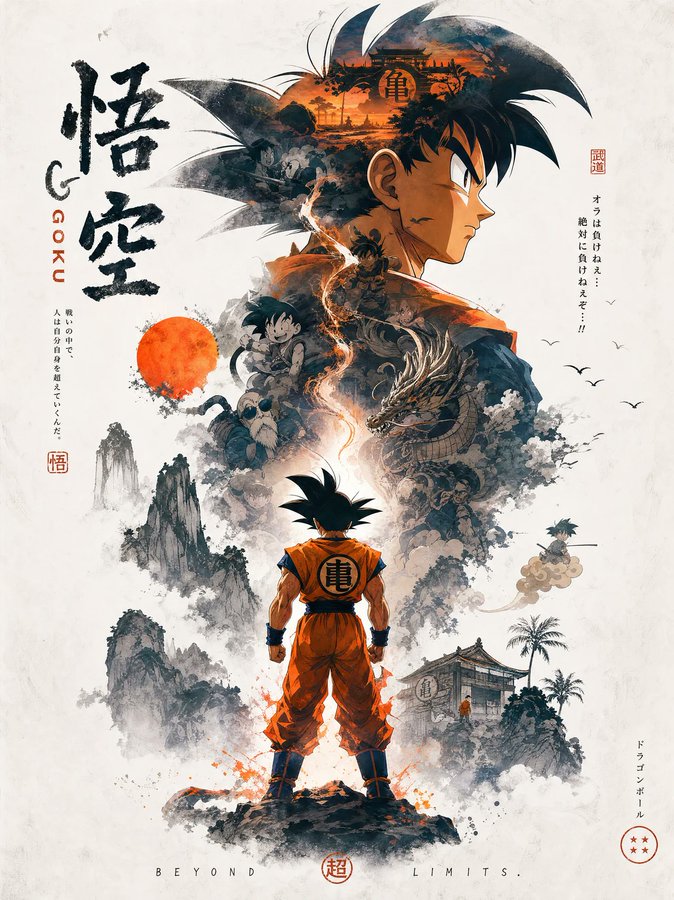
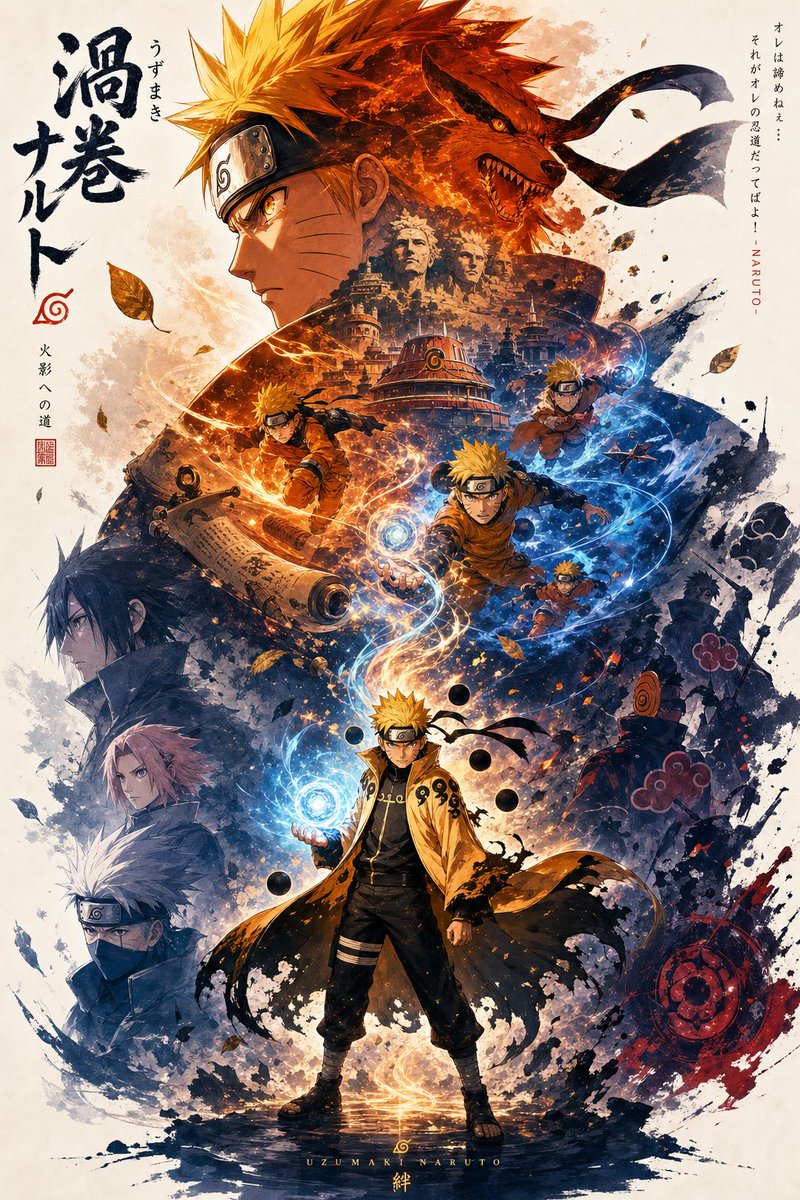
Ultra-premium propaganda poster, A4 size, vertical composition, themed around Naruto Uzumaki in a distinct shinobi-inspired visual language. Poster structure: Top section (dominant upper half): A large, iconic silhouette of Naruto’s head and upper torso, facing slightly sideways, with intense determined eyes and forehead protector clearly visible. His hair and headband cloth flow outward, forming the primary visual mass. Inside this large silhouette: apply a double exposure narrative collage using a warm-to-cool chakra gradient (orange, red, deep blue). Integrate layered elements such as: – Kurama (Nine-Tails fox) faintly emerging behind or within the silhouette – Hidden Leaf Village skyline (Konoha rooftops, Hokage Rock) – swirling chakra energy patterns and wind trails – small action scenes (Naruto running, Rasengan forming, shadow clones mid-motion) – symbolic elements like scrolls, kunai, and leaves carried by wind Middle to bottom section: Full-body Naruto as the secondary subject, standing grounded with a slightly forward-leaning stance, one hand forming Rasengan, cloak (Six Paths or Hokage cloak variation) subtly flowing. This figure anchors the composition. Composition flow: Create a vertical energy stream (chakra flow line) connecting: full-body Naruto → rising chakra particles → internal collage → large silhouette above This line should feel like ascending energy or destiny. Left and right sides: Introduce asymmetrical supporting elements for narrative tension: – Left: faint silhouettes of allies (Sasuke, Sakura, Kakashi) blended softly – Right: abstract enemy presence (Akatsuki clouds, shadowy figures, broken fragments) All elements should feel embedded within mist, chakra haze, and layered space. Visual style: Eastern ink-wash + modern anime fusion. Use: – ink diffusion edges – soft blur transitions – fragmented textures – layered clouds and smoke-like chakra – controlled white negative space Color design: More vibrant and striking than traditional — glowing oranges, electric blues, deep blacks, with subtle gold highlights. High contrast focal lighting on face and Rasengan. Aesthetic tone: Epic, emotional, and symbolic of growth, struggle, and legacy. Overall: Highly refined, cinematic, layered storytelling poster with strong hierarchy, clean composition, and powerful central identity.